



Montessori Philosophy
The purpose of this educational approach is to support children as they develop into adulthood, preparing them for life. Each individual develops independently and at their own pace, and Montessori education encourages this.
Characteristics
Montessori pedagogy
Respect for oneself, respect for others, respect for the environment
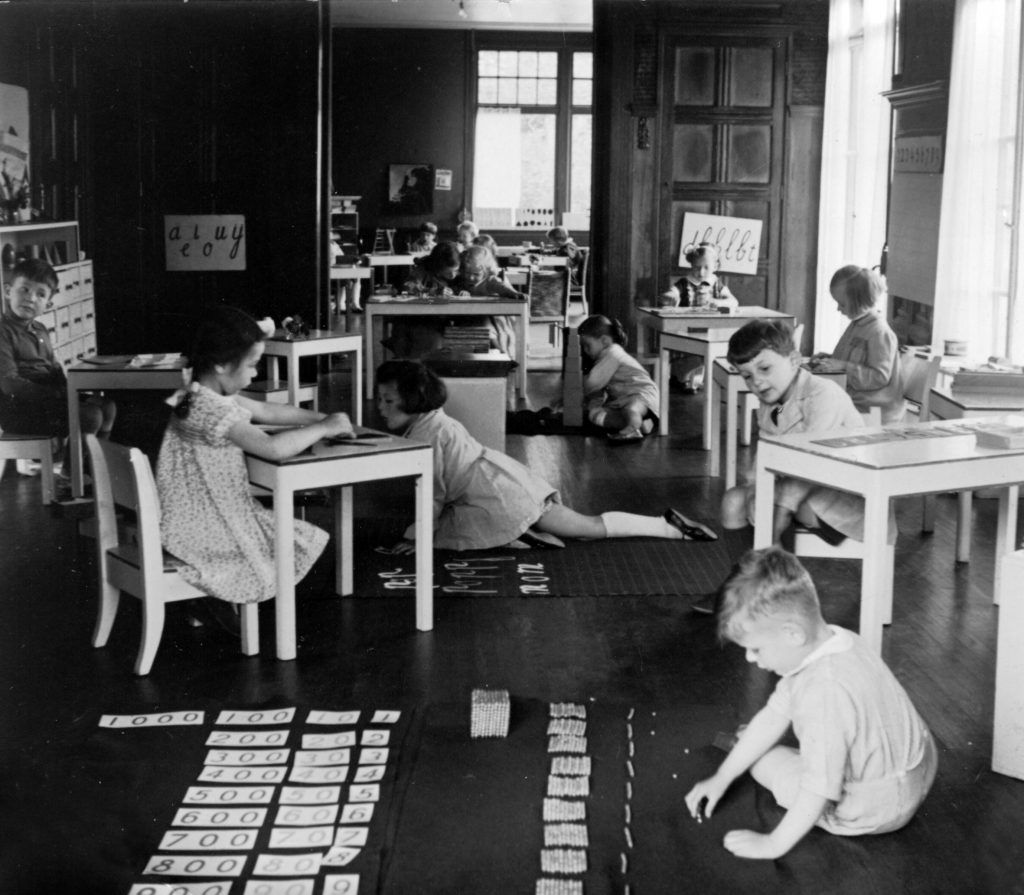
A Montessori classroom provides a prepared environment where children are free to follow their natural inclination to “be engaged.” The prepared environment provides the essential elements for a child’s optimal development. These key elements include the children, the teacher, and the physical environment around them, including Montessori educational materials.
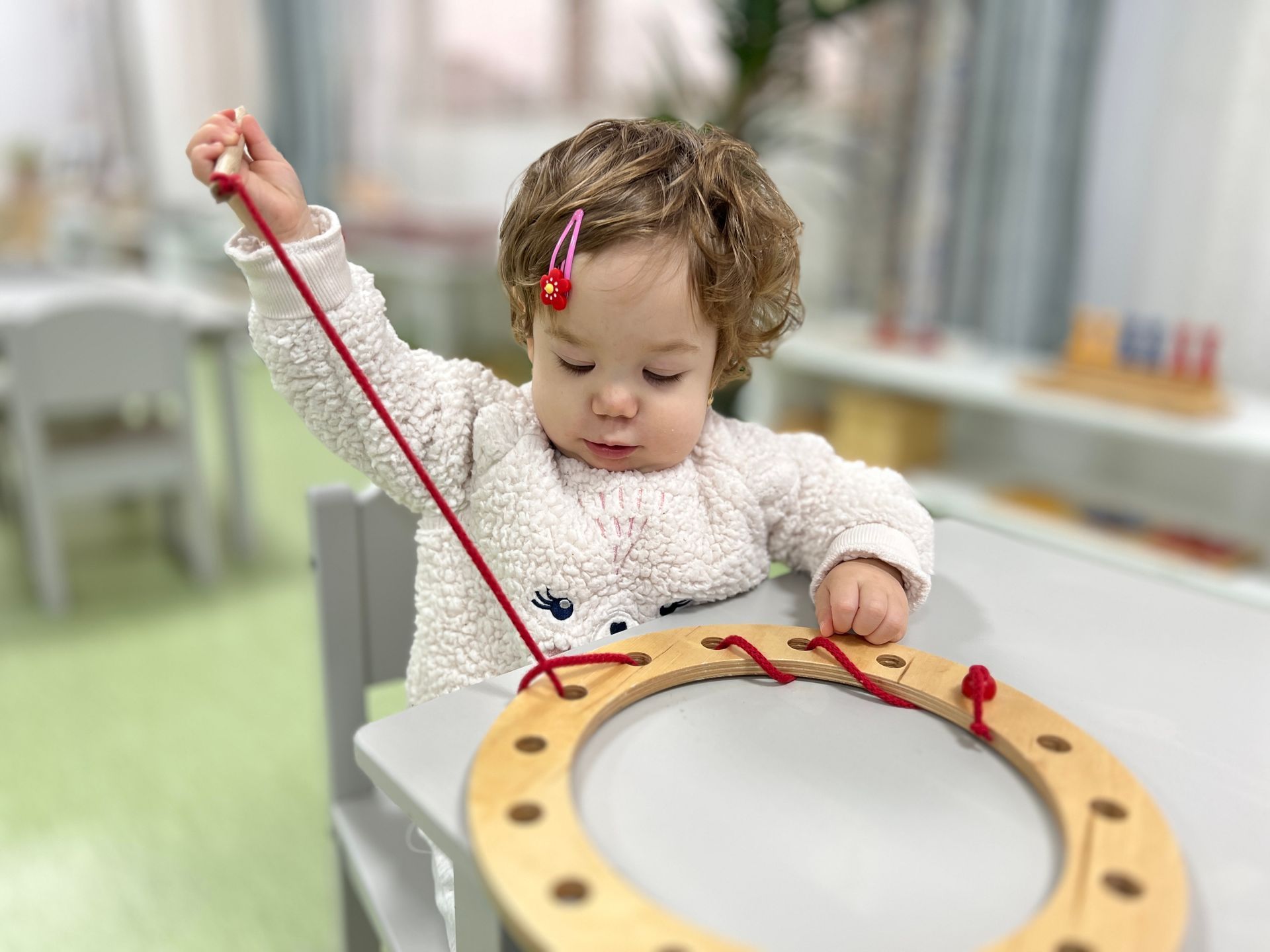
The Montessori environment is an orderly, beautifully arranged, light-filled space. The classroom has shelves specially designed to suit children's height, giving them access to Montessori materials. The tables, chairs and, in fact, all the furniture are designed to suit children's height.
The Educator’s Role
More than a guide, it is the key to better concentration
The Montessori teacher acts as a guide, giving children the key to explore further. Their main role is to observe each child and provide them with appropriate presentations. These presentations allow children to learn at their own pace, working toward the ultimate goal of developing concentration.
Montessori Environments
Purpose-designed environments for different age groups, where learning happens naturally
Montessori environments are designed for mixed-age groups, as this facilitates children learning from one another and supports their social development. A Montessori classroom is like a small community, giving children the opportunity to manage things themselves. For example, a group of children takes turns serving lunch to the whole group. It has been observed that younger children learn simply by watching older children work with more advanced materials.
In the elementary cycle, the focus is on children’s need to socialise, which is characteristic of ages 6–12. Materials and activities are therefore designed for small-group work or projects on a range of themes.
Unlike the 6–12 age stage, which is defined by stability, this third stage is characterized by intense physical and emotional changes. Adolescents need acceptance, protection, love, boundaries and desirable role models around them. “The adolescent is a newborn in the social world.”
The formation of moral awareness and the development of conscious independence and autonomy within social relationships form the basis for optimally activating the social sensitivity characteristic of this new stage.
The need to strengthen self-confidence is based on social recognition. At this stage, attitudes and perspectives on life and the world develop, along with numerous expressions of creativity, originality, and motivation.
Purpose-designed environments for different age groups, where learning happens naturally
The Materials
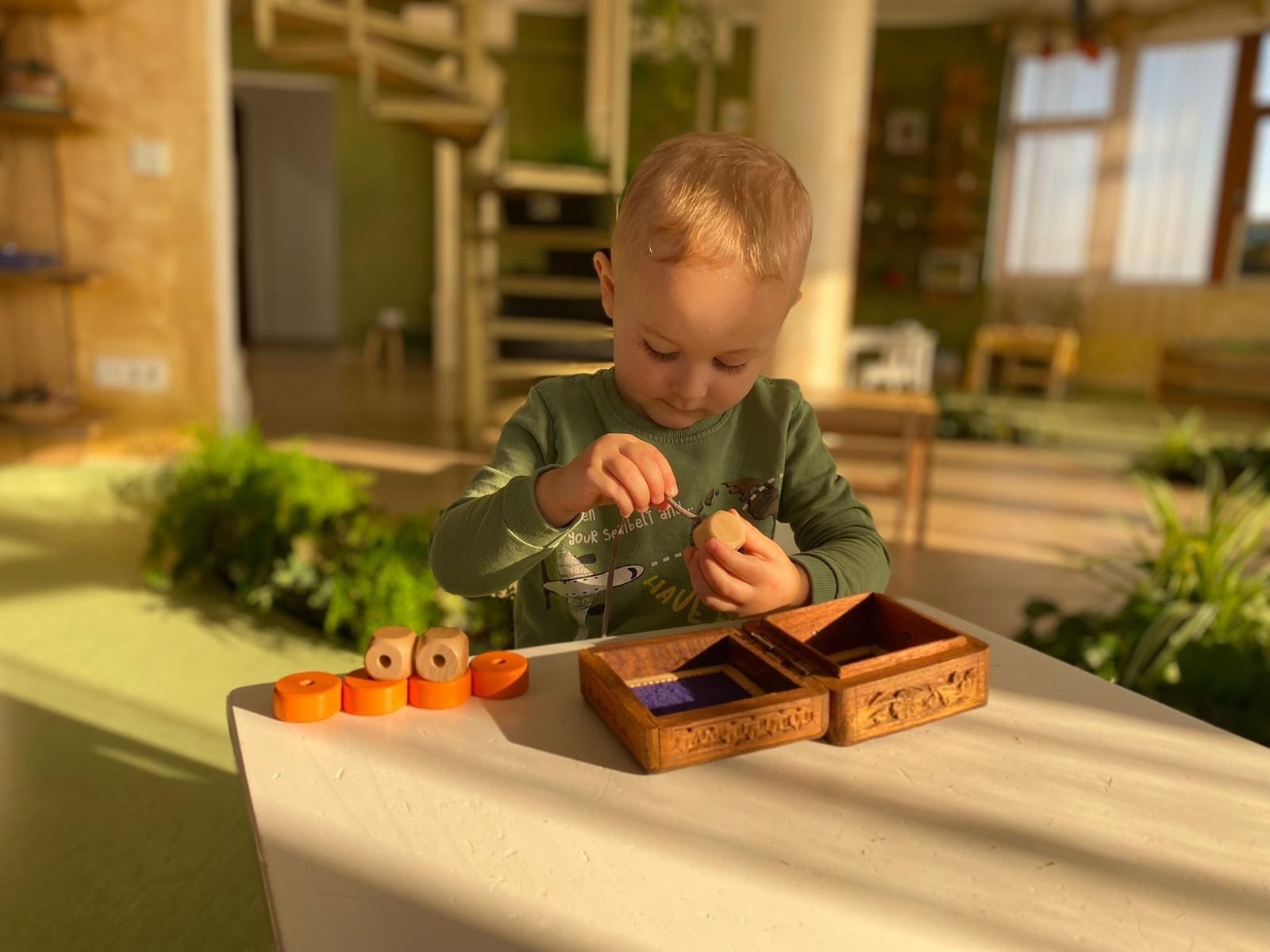
Nursery and Kindergarten 0–6 years
Montessori environments are designed for mixed-age groups, as this encourages children to learn from one another and supports their social development. A Montessori classroom is like a small community, giving children the opportunity to manage themselves.
For example, a group of children takes turns serving lunch to the whole group. It has been observed that younger children learn simply by watching older children work with more advanced materials.
Materials are carefully arranged on shelves by area (for example, in the 3–6-year-old classroom: practical life, sensorial, language, and mathematics), and each has a designated place. Children are guided and encouraged to choose the materials that have been presented to them by their teacher. They can work with them either at a table or on a mat, which they unroll on the floor themselves.
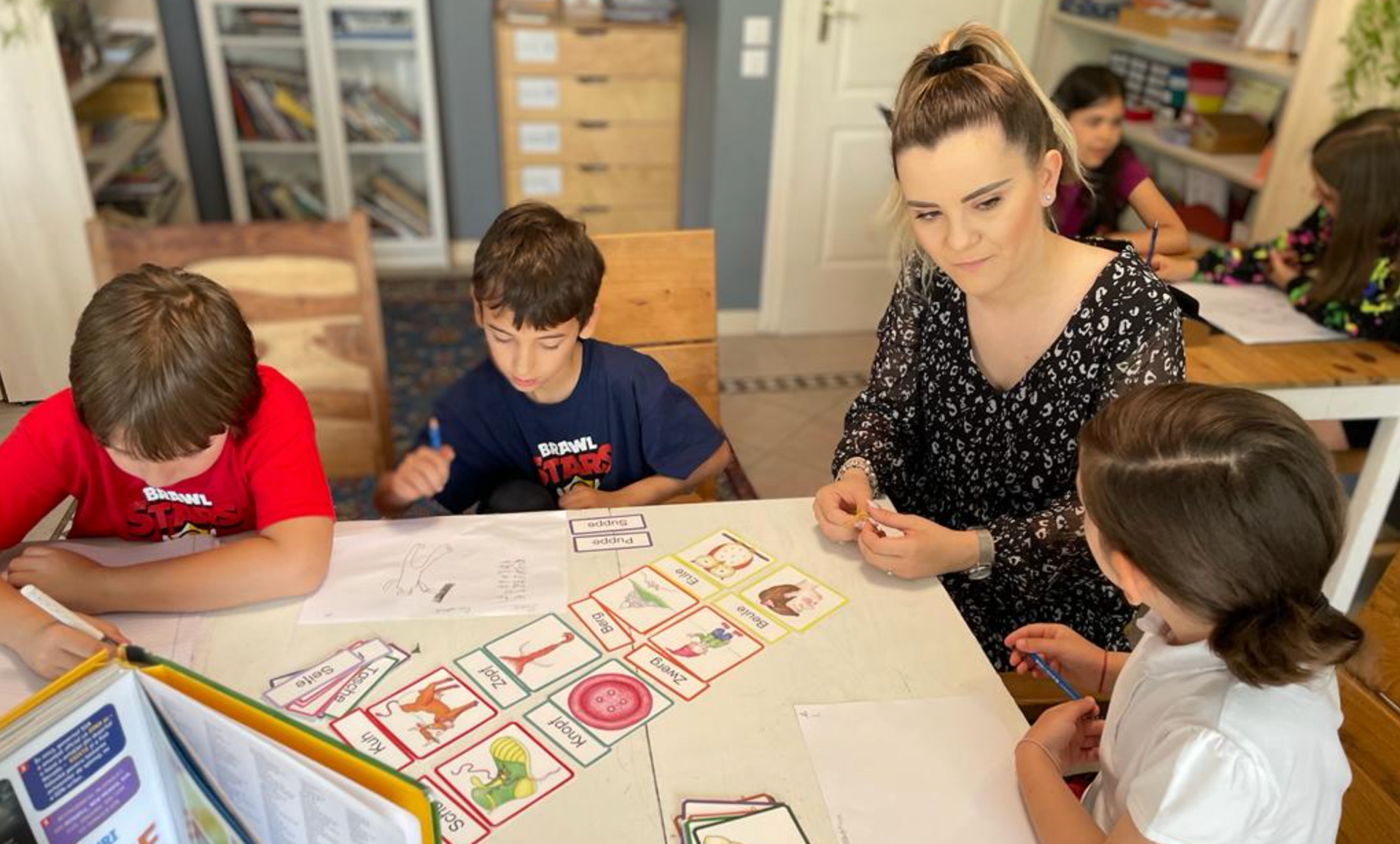
School, ages 6–10
At the elementary level, the focus is on children’s need for social interaction, which is characteristic of ages 6–12. Accordingly, the materials and activities are designed for small-group work or projects on a variety of themes.
As children grow, the materials become more complex, supporting the transition from concrete to abstract thinking. The shelves contain materials for advanced mathematics, grammar, historical timelines, detailed maps, and simple science experiment equipment. Students continue to choose their activities, but are encouraged to work in small groups and initiate research projects, using both classic Montessori materials and resources such as books and the internet. The environment also supports “going out” into the community to explore.
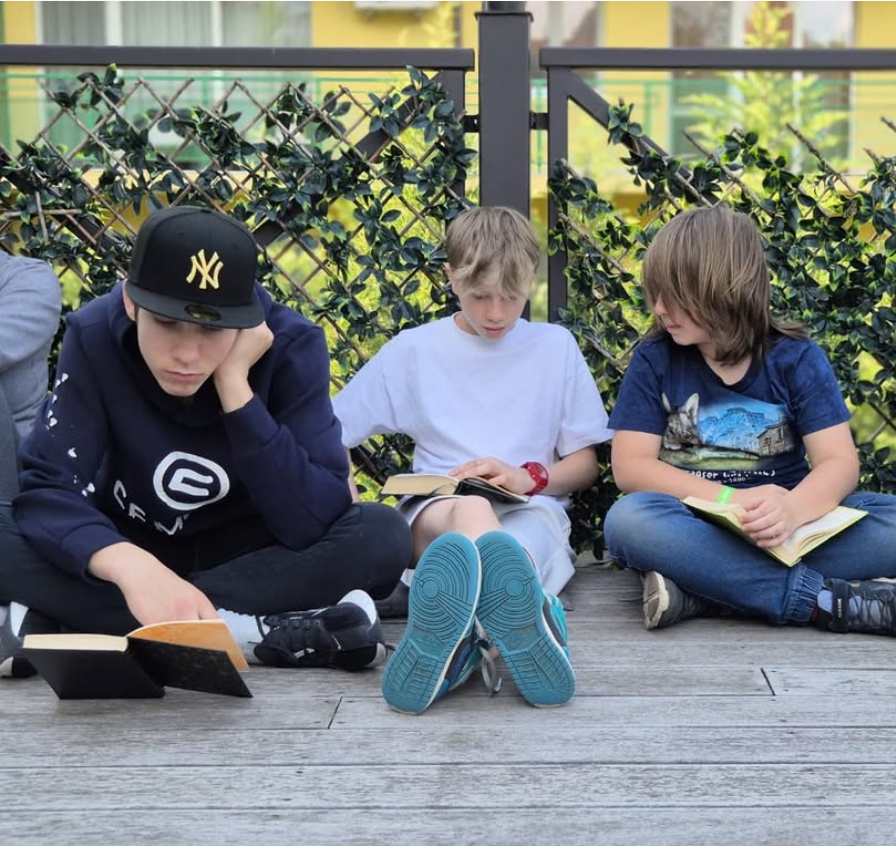
Middle School and High School, ages 10–18
At this stage, "materials" become resources and experiences from the real world. The ideal environment is a farm or production setting where adolescents engage in real productive work (e.g., agriculture, running a small business). Here, academic learning is directly integrated into practical projects (calculating profits, studying soil chemistry, writing business plans). For high school, the environment becomes a laboratory for life, with access to advanced laboratories, external mentors and opportunities for independent research and entrepreneurship, preparing young people for full autonomy and active contribution to society.
At this stage, attitudes and a worldview develop, alongside many expressions of creativity, originality and motivation
Brief History
Maria Montessori
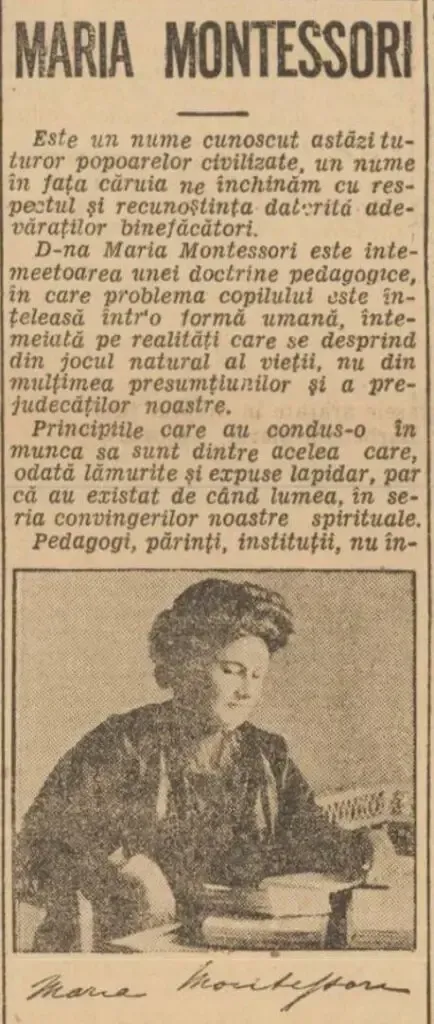
Almost 100 years ago, Dr. Maria Montessori discovered the deep desire children are born with: to interact with the world around them. She observed that children flourish when they are free to learn in their own way, in a prepared environment. She thus pioneered a radical approach to education, based on the scientific study of how children grow and learn, and designed an educational environment to meet their ever-changing developmental needs. Montessori education has an ambitious goal: to support each child’s development into a well-rounded adult, comfortable with themselves, society, and humanity as a whole.
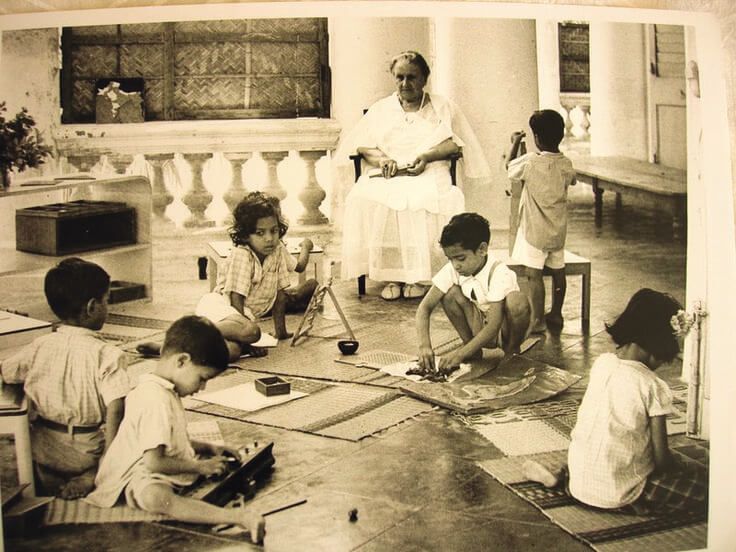
Maria Montessori’s approach took shape through the work Dr. Maria Montessori carried out in a disadvantaged neighborhood in Rome in 1907 with around 60 children. At the time, Montessori was a doctor and a renowned advocate for women’s rights, as well as a professor of anthropology at the University. She was simply amazed by what she discovered children were capable of, and gave up some of her other work, including her university position, to focus on working with and observing young children.
With her medical training as a foundation, Maria Montessori approached her work with children scientifically, observing their development, both physically and mentally. She concluded that children are capable of learning on their own through interaction with their surroundings—a view supported by science today.
One thing remains unchanged
The child’s ability to learn on their own has not changed for at least 800 years
Over the next five decades, Maria Montessori, supported by her son and collaborator Mario, continued her work in education and developed a comprehensive approach to education from birth to adulthood. The entire approach is centered around the discovery that, when given the freedom and prepared environment to meet their developmental needs, children can learn by themselves.
The design of prepared environments has evolved and continues to evolve under the guidance of the Association Montessori Internationale (AMI), founded by Dr. Montessori in 1929. What children learn today is very different from what they learned 10 years ago. However, a child's ability to learn independently is a psychological fact of human nature that has remained unchanged for at least 800 years.
Montessori in Romania
Romanians have been familiar with Montessori since the very beginning.
Many Romanians attended Maria Montessori’s courses abroad and listened to her lectures in various places around the world.
In 1934, the Romanian delegation had 20 participants at the International Montessori Congress. In 1933, the Constantin Rădulescu Motru Association was established, with Nicolae Titulescu as its honorary president. He was an honorary member of AMI and an honorary member of Montessori educators in England.
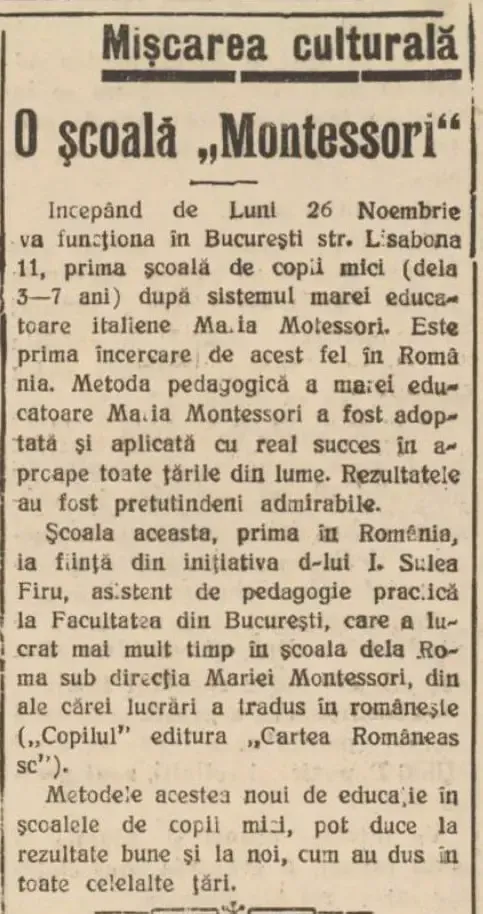
There was also a Montessori kindergarten, “Casa Copiilor”, in the Grant neighbourhood of Bucharest. Georgeta Filitti, a Romanian historian, attended Montessori elementary school at “Cuibul cu barză”, taught by educators trained by Maria Montessori herself. The first Montessori kindergarten in Bucharest, alongside the Pedagogical Institute, operated for one year, from 1934 to 1935. Ilie Șulea Firu was appointed AMI representative in Romania in 1931. AMI approved the founding of another association (ADEMR) in 2012, when the AMI president came to Bucharest and the affiliation ceremony with AMI took place.
In 2007, two Montessori kindergartens authorised by the Ministry of Education were established in Bucharest and Timișoara. Montessori Institute of Bucharest (MIB) was founded in February 2013, and its first assistant course took place in May 2013. There are now over 100 Romanian educators and teachers certified by AMI.
Studies and research
Dr. Montessori’s confirmation and conclusions
Montessori education is education for peace—for a balanced relationship between child and adult that leads to a peaceful and harmonious world. The Association Montessori Internationale (AMI) continues the work begun by Maria Montessori, ensuring the quality and high standards of training programs for educators, and evaluating and approving authentic Montessori materials and learning environments.
For all her work, Dr. Maria Montessori was nominated three times for the Nobel Prize. At the UNESCO General Assembly, where she was present, the Director-General said of Maria Montessori: “We have among us a person who has become a symbol of our great hopes for education and world peace.”
Scientific research confirms that Montessori education offers not only academic benefits, but also benefits for children’s social and emotional development. Studies conducted in the US show that children who received an early Montessori education (ages 3–6 and 6–12) achieved significantly better results in mathematics and science during middle school than children who attended other school programs. (Dohrmann, K., “Outcomes for Students in a Montessori Program: A Longitudinal Study of the Experience in the Milwaukee Public Schools”, AMI/USA May, 2003)
Studies also validate Dr. Maria Montessori’s observations about how children learn, confirming the benefits of learning through movement, the detrimental effect of external rewards on a child’s motivation, the advantages of a prepared and orderly environment, and the academic and emotional benefits when children have the freedom to choose. (Lillard, A.S., Montessori: The Science Behind the Genius, New York: Oxford UP, 2005). Comparing the curricula of several educational methods, the Montessori approach meets many of the essential criteria for developing executive function across a broad age range. (Diamond, A. & Lee, K., “Interventions Shown to Aid Executive Function Development in Children 4 to 12 Years Old,” Science 333:+40758 633 664 and Supporting Online Material, Aug. 19, 2011).
Adele Diamond, Professor of Cognitive Neuroscience Development at the University of British Columbia (Canada), is one of the leading researchers on cognitive development and an advocate of Montessori education. In her paper “The Evidence Base for Improving School Outcomes by Addressing the Whole Child and by Addressing Skills and Attitudes, Not Just Content.” Early Education and Development, 2:+40758 633 664, Adele argues that the most effective strategy for achieving academic success is to nurture children’s social, emotional, and physical needs as well, as is done in the Montessori approach.
Famous Montessori Alumni
“I do not believe there is a method better than Montessori for making children sensitive to the beauties of the world and awakening their curiosity regarding the secrets of life.”
Gabriel Garcia Marquez

Mark Zuckerberg
Katharine Graham
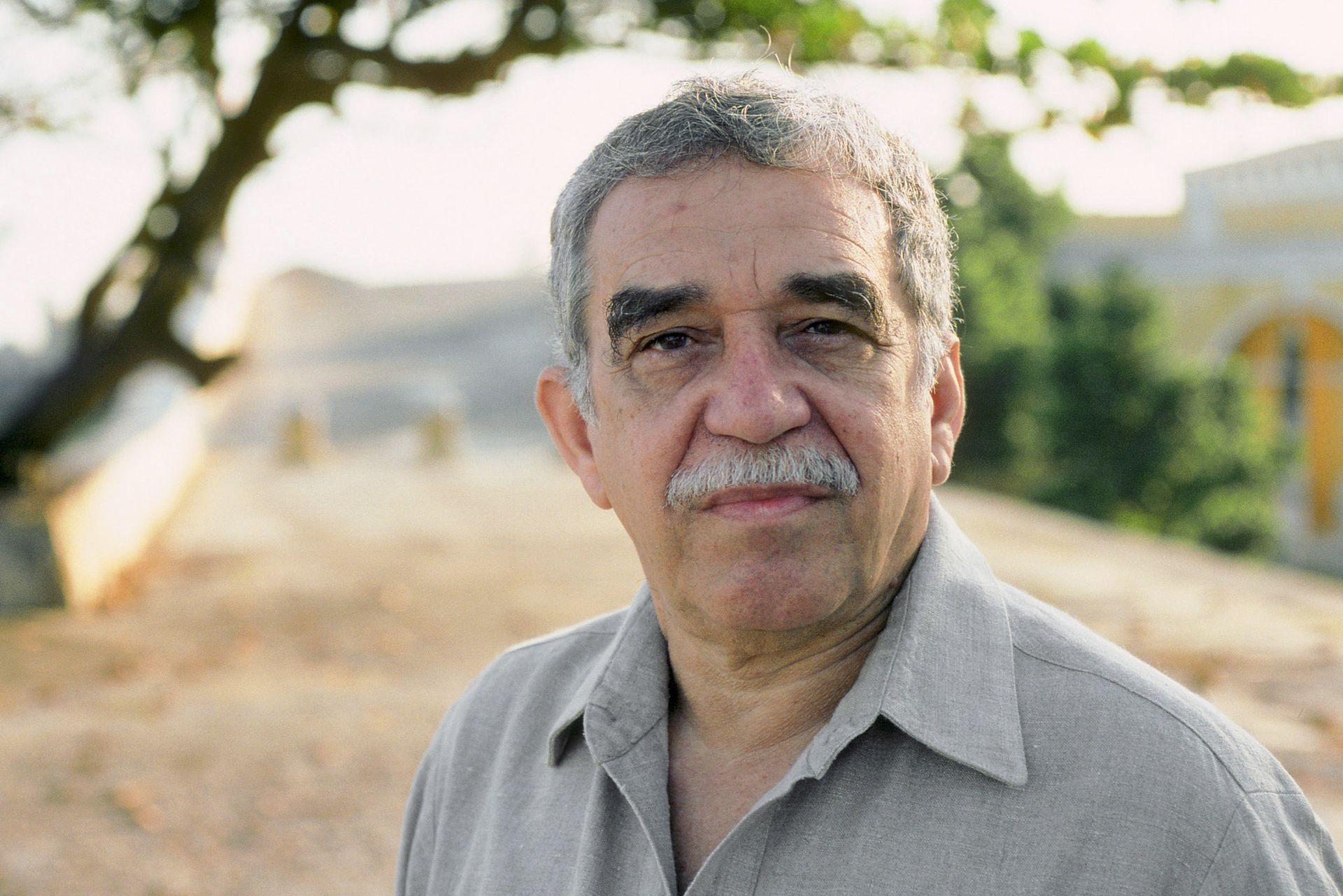
Gabriel Garcia Marquez

Larry Page and Sergey Brin





Jeffrey Bezos

Bill Gates
Respect for oneself, respect for others, respect for the environment.
Frequently Asked Questions
about the Montessori philosophy and method
What Is a Montessori Prepared Environment?
The Montessori classroom is an environment prepared by adults for children. It contains everything essential for optimal development.
The prepared environment is characterised by order, beauty, simplicity and real objects. Everything is adapted to the child’s size to encourage independence. A qualified adult and a sufficiently large group of children of different ages are essential elements of the prepared environment.
What does the term Children's House refer to?
Casa Copiilor is the Romanian name for “Casa dei Bambini” (Italian). This is the name Maria Montessori gave to the first preschool she founded in 1907.
The Children’s House is a prepared environment for children aged 3 to 6, where they live and grow. It is a safe space with everything they need for optimal human development.
What is a 3-hour work cycle?
After observing children around the world for many years, Maria Montessori understood that when left free, they have a distinct activity cycle that is so predictable it can even be charted. This cycle, with two peaks and one low point in concentration, lasts approximately three hours.
In Montessori schools, children are given 3 hours of independent, freely chosen, uninterrupted activity with no set schedule, during which they concentrate and repeat their work until they feel satisfied.
What is a work cycle?
When young children engage in an activity that interests them, they will repeat it countless times, apparently for no reason, and stop suddenly only when the inner need that drove them to the activity has been satisfied.
To allow for long, highly focused work cycles, the Montessori method calls for an uninterrupted three-hour work period.
Why do we call a child’s activity “work” in the Montessori environment?
Childhood is a long period, allowing children to learn and explore in a free environment, without pressure from adults. Most social scientists call this activity play (e.g., see Groos, 1901), although Montessori preferred to call it the work of childhood.
There is no doubt that children are serious when they engage in games that meet their developmental needs, and given time and freedom, they will choose purposeful activities, not frivolous or unrealistic ones
Why do children repeat the same activity many times?
A young child’s activity is entirely different from an adult’s. When adults work, they set out to achieve a goal and stop once they have achieved it. Children, on the other hand, do not work toward an external goal, but an internal one. They will repeat an activity until this inner goal is achieved. The unconscious need to repeat helps children coordinate their movements or master a particular skill.
How does the Montessori educator/teacher “teach”?
The prepared adult in a Montessori environment does not teach in the traditional sense of the word. They show the child how to work with different materials, then let them explore and experiment freely. This is called a presentation. To be effective, the presentation must be given step by step, using precise, slow movements and as few words as possible.
What does the concept of “mixed-age groups” refer to?
One of the characteristics of the Montessori method is that children of different ages work together in the same classroom. Age grouping is based on belonging to the same developmental plane. Children aged 3–6 are together in the same preschool classroom; those aged 6–9 attend Primary I, while those aged 9–12 attend Primary II. As the work is individual, children progress at their own pace; across age groups, there is more cooperation than competition.
What does the concrete-to-abstract approach mean in a Montessori classroom?
A logical, progressive approach appropriate to the child’s stage of development. First, the child works with concrete materials that embody an abstract idea (e.g. size or colour). Through sensory experience with the materials, the child absorbs the concepts they convey and gradually becomes able to work with them in the abstract. The child can understand the same idea in symbolic form only as they develop.
Why are Sensorial Materials Used?
These materials were created to help the young child develop and organize their own intelligence. Each material, based on scientific principles, isolates a quality found in the world—for example, color, size or shape—and this isolation focuses the child’s attention on a single quality.
Through repeated use of sensory materials, the child begins to form clear ideas and abstractions. What cannot be explained in words alone is learned through the child’s experience of working with sensory materials.
What are practical life activities?
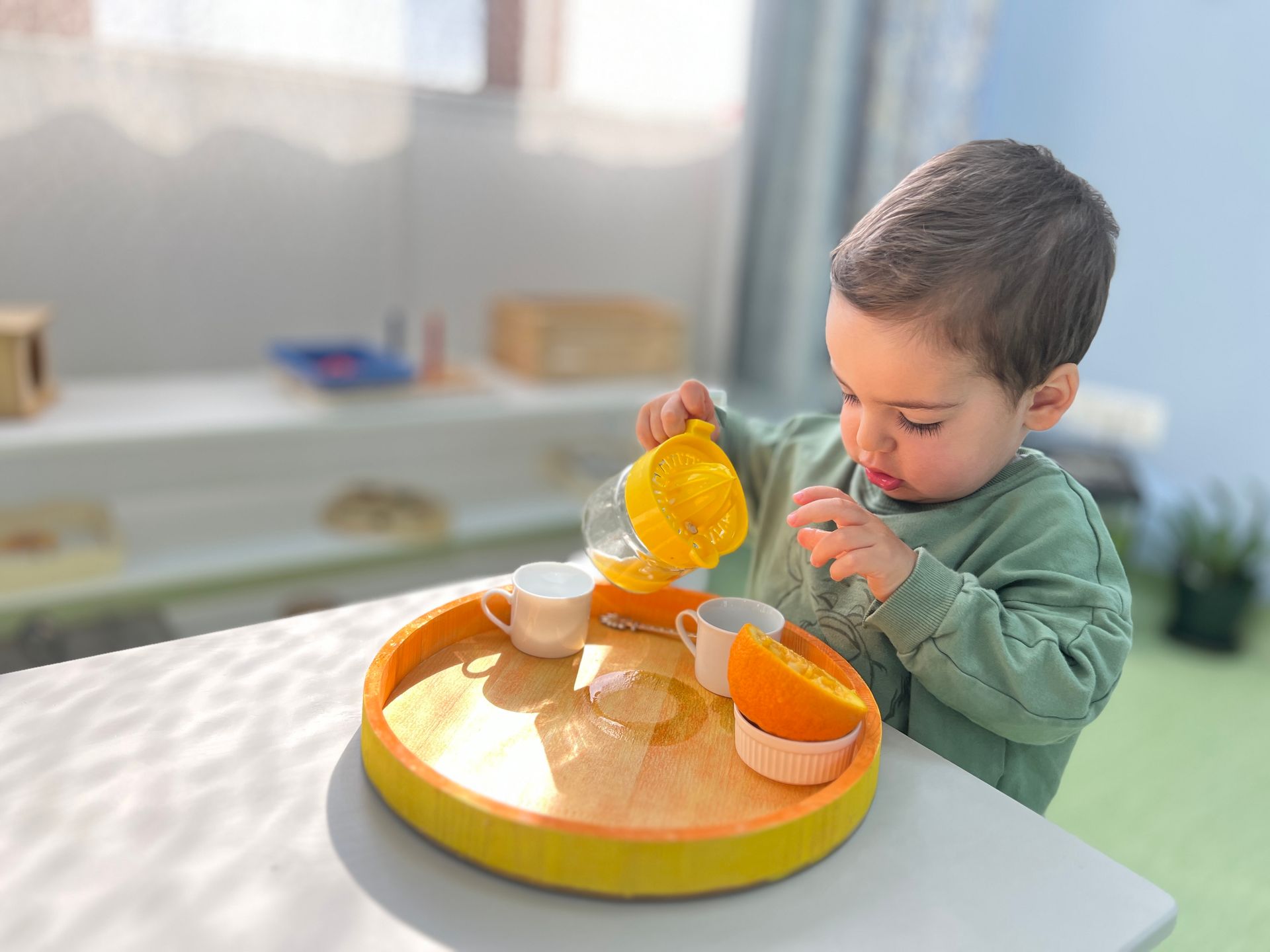
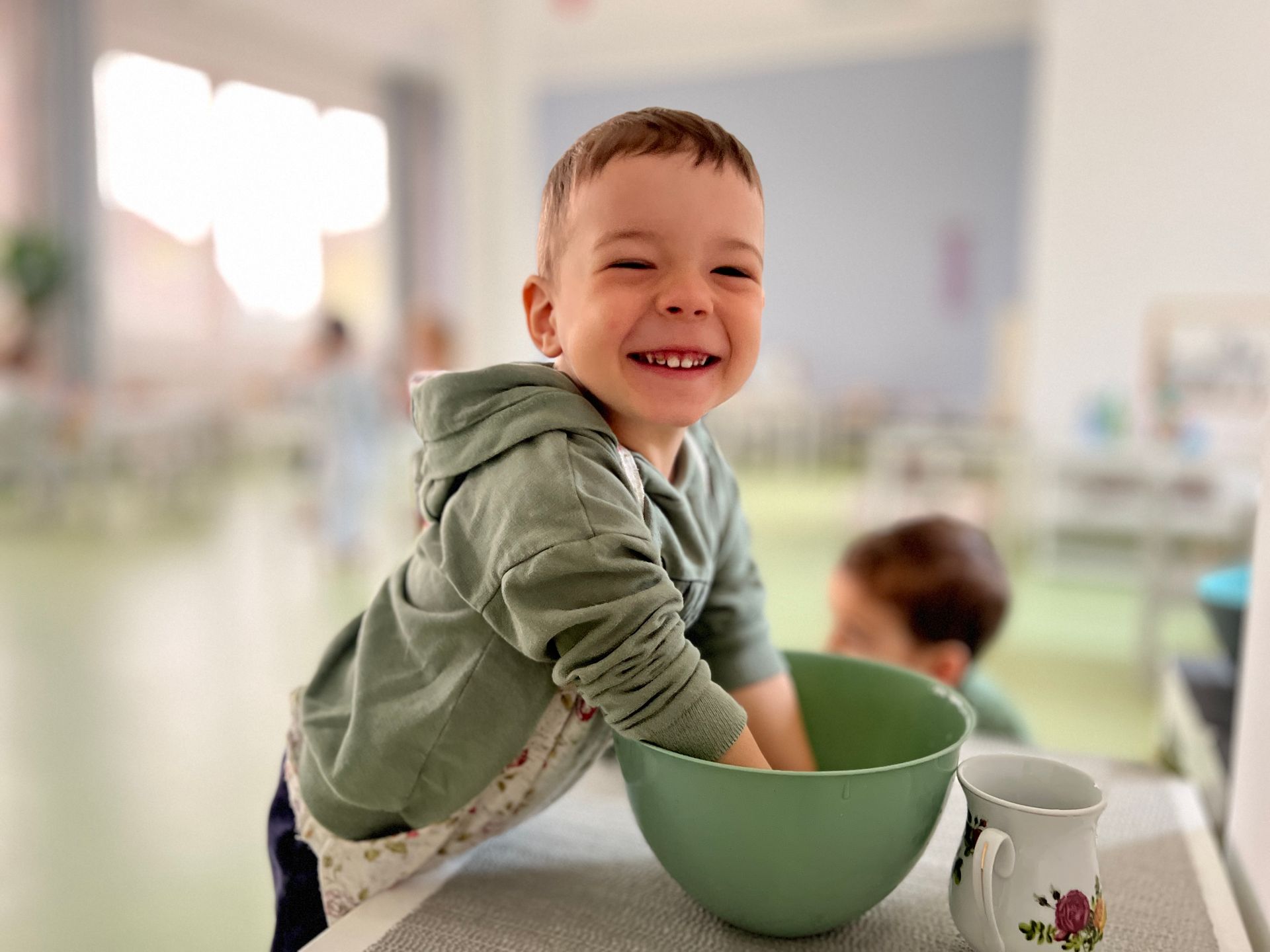
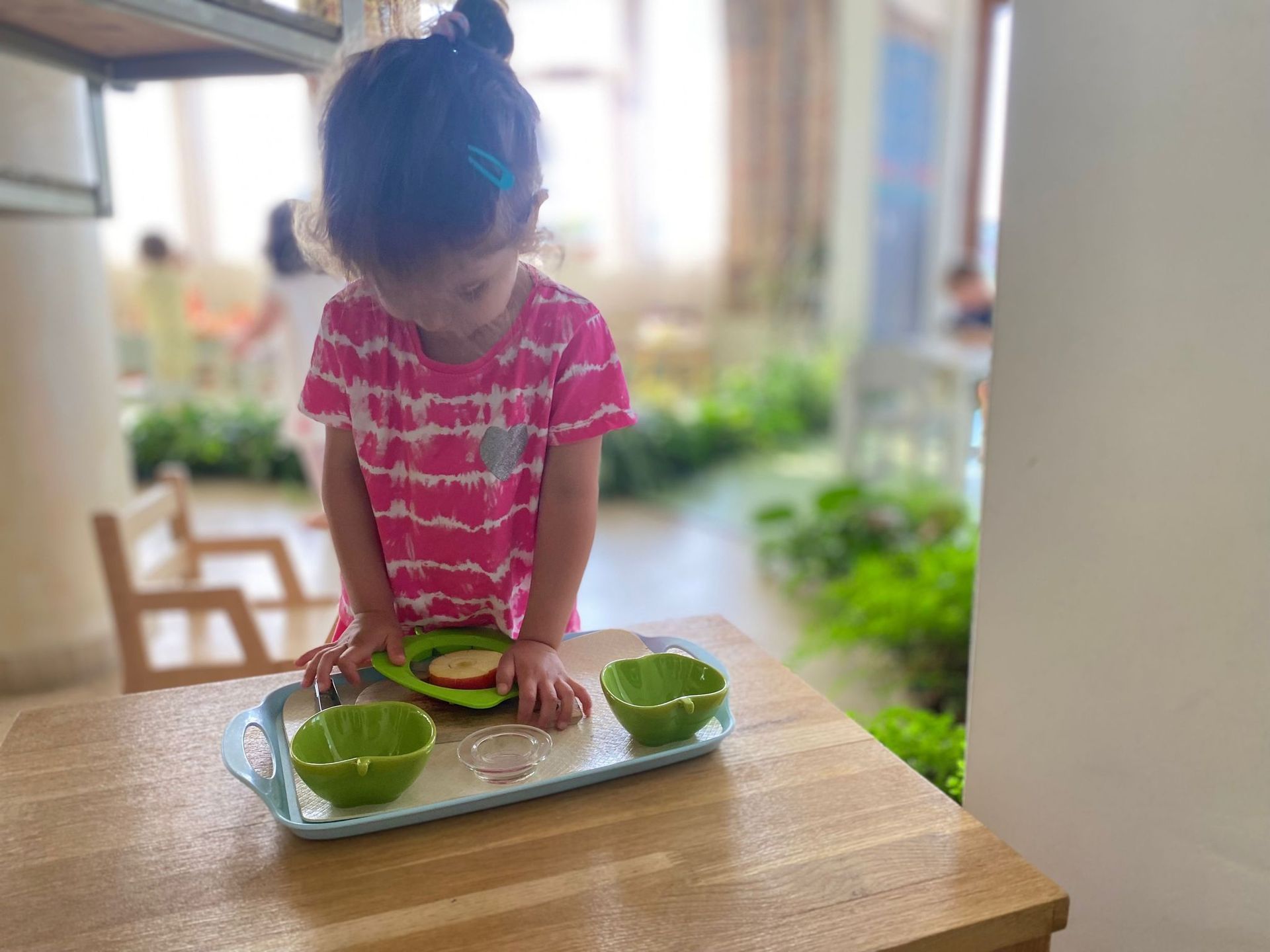
One of the four areas of activity in the Montessori prepared environment. Practical Life exercises recreate simple everyday household activities: sweeping, dusting, washing dishes, and more.
These purposeful activities are intended to help the child adapt to the new community, learn self-control, and begin to feel like an active member of a social group. As the child works with their hands, their intellect develops and their personality becomes more balanced, as body and mind function as a unified whole.
What are grace and courtesy exercises?
One aspect of practical life. Short lessons that demonstrate positive social behavior and help children adapt to group life, while teaching them about acceptable behavior in society—practical knowledge that is useful both at school and outside it.
What does valuing language refer to?
From their first days in a Montessori classroom, children have the opportunity to listen to engagingly told true stories about familiar subjects. Songs and poems are part of everyday classroom life.
The teacher models the art of conversation and listens respectfully to the young participants. Admiring beautiful books with attractive, realistic illustrations is also part of valuing language.
Why is such importance placed on building vocabulary?
A young child’s vocabulary grows exponentially between the ages of 3 and 6. To satisfy this natural hunger for words, children are introduced to vocabulary related to biology, geometry, geography, and more, as well as words describing the qualities of sensory materials. The child’s absorbent mind stores all these new words “rapidly and with a special intelligence” (Montessori, 1946, p. 10).
What does the “sound game” refer to?
Many children know the alphabet, but have not analyzed the sounds that make up words and do not realize that a word is made up of different sounds (phonemic awareness).
From the age of 2 (once the child is speaking fluently), sound games help them become aware of the sounds in words. In England, the rhyme “I spy” is used. The sound of the letter is pronounced, not the letter’s name.
What does children’s adaptability refer to?
Related to the concept of the absorbent mind (Haines, 1993), this quality is a special capacity of the child known as the capacity for adaptation. This is the process by which a child uses their environment for their own development, thereby becoming part of that environment. By simply living in a particular society, the child absorbs the culture of a particular place and time, assimilating the spirit, customs, ambitions, aspirations and attitudes of that society.
How does inner discipline work in Montessori?
In fact, it is about self-discipline. Discipline in a well-functioning Montessori classroom is not the result of teachers exerting control or using rewards and punishments. It comes from within each child, who becomes able to manage their behavior and make positive choices about their own actions. Self-discipline is closely linked to the development of willpower.
What does the mathematical mind refer to?
All children are born with a mathematical mind, meaning they are inclined to learn things that enhance their ability to be precise and orderly, to observe, compare and classify.
People have a natural tendency to calculate, measure, reason, abstract, imagine, and create. This vital part of intelligence must be supported and guided in order to develop and function. If mathematics is not part of a young child’s experience, their subconscious will not accept it later.
What does the concept of “maximum effort” refer to?
Children naturally enjoy challenging activities that call on their abilities and give them a sense of growing strength. They beam when they give something their all. For example, a slight child will try with all their might to carry a large tray of full glasses of juice or push a heavy wheelbarrow.
If allowed to imagine a problem, schoolchildren would rather struggle with a more difficult calculation, (1+2+3+4 … +10)x5, than repeat sums such as 3+5 =…. and 6+2….
What does it mean when a child exhibits challenging behavior?
Behaviours often seen in children, resulting from obstacles in their normal development. These behaviours may be considered negative (a shy child, an aggressive child, etc.) or positive (a passive child, a quiet child). Deviations disappear when the child begins to concentrate on an activity they have freely chosen.
What are learning explosions?
Human development is often far from slow and steady; new abilities can become visible all at once, unexpectedly and with explosive effect. Such learning explosions are the sudden outward manifestation of a long process of inner development. For example, the explosion of speech around the age of 2 is the result of many months of inner preparation and mental development.
What does the child’s normalization process mean?
When young children repeatedly have the opportunity to enter periods of spontaneous concentration on an activity they have chosen themselves, they begin to show the characteristics of normal development. The child is absorbed in work, grounded in reality, and enjoys quiet and working independently.
Normalized children are happier: enthusiastic, generous and eager to help others. They choose their activities constructively, and the way they work reflects their level of development.
Why is the noise level sometimes higher in a Montessori classroom?
One phenomenon observed in Children’s Houses around the world is that, at around 10:00 a.m., children seem to lose interest in what they are doing, become disorganised, and the noise level in the classroom rises. The children appear tired. However, if the teacher understands that this is simply a false fatigue, the children will carry on working—and work even better than before.


