


Nursery
What we can do is shape and create an environment where the child can be active. The way a child learns differs from the traditional learning process, so it is important to provide the best environment for them to thrive, with real, hands-on experiences.
About the age of
0–3 years
The first plane of development, from 0 to 3 years (“the psychic embryo”), is when social and cultural characteristics are acquired.
Children need reality now more than ever, because they cannot understand the world they live in without engaging with real, factual information.
Throughout this entire first plane, the child learns through their senses, which is why Maria Montessori called them a “sensorial explorer”. The things they explore must therefore be rooted in reality, because they do not yet have enough information to distinguish between what is real and what is fantasy. They need reality because they are building themselves.
Every child is born with 100 billion neurons, and during this period they create everything that is specific to being human from the cultural and social environment they come from. For example, they learn how to move, how to speak, good manners, a sense of humour, and so on.
It is important for them to have the best possible environment in which to thrive and to be offered real, hands-on experiences.
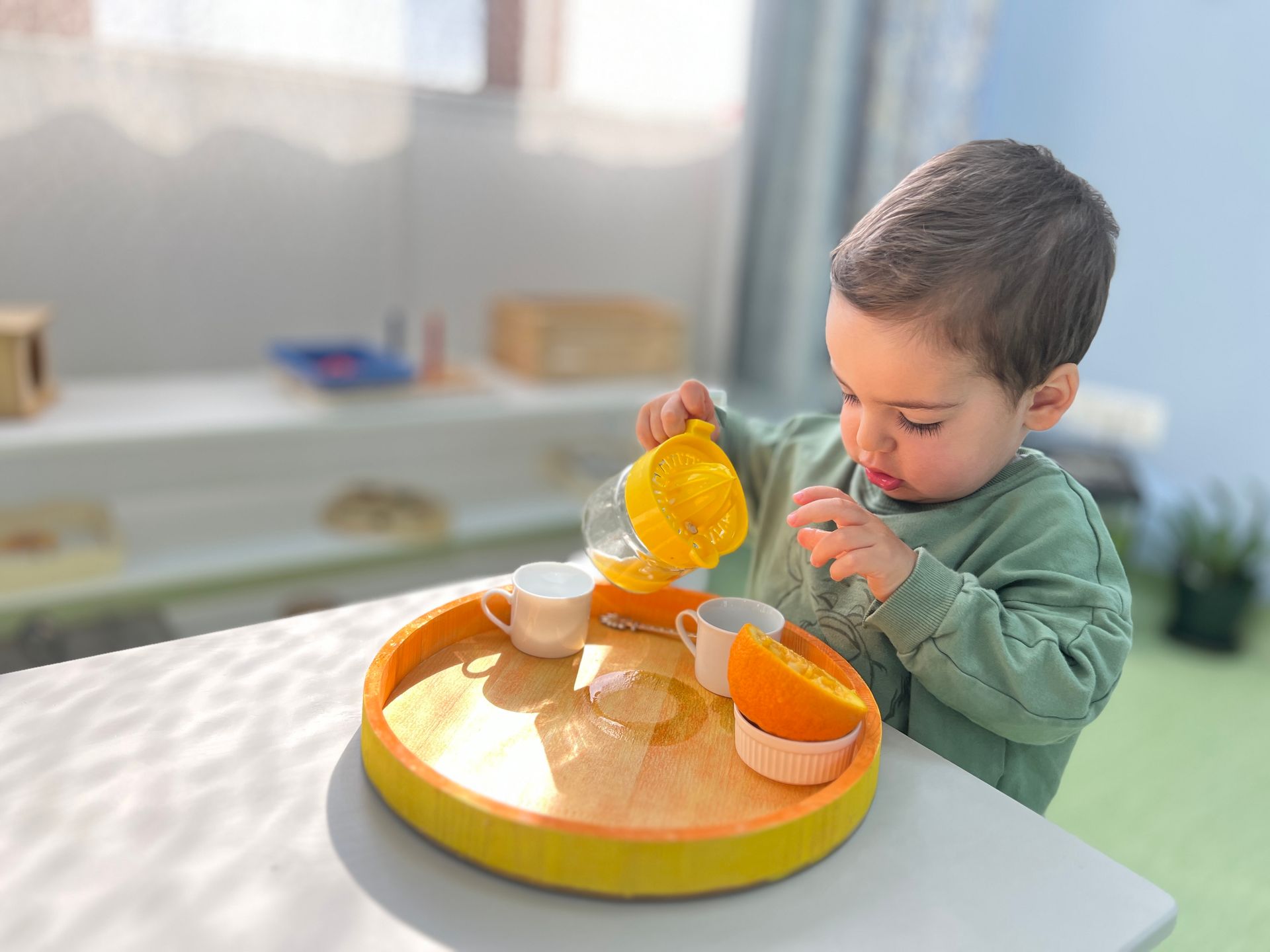
Alongside the period of sensory exploration, we can also talk about the “what” stage, when the child constantly asks, “What is this?” At this stage, children need to learn the name of every object and all the words they can. If they pick up an orange, they want to see what it looks like, feel it, smell it, learn what it’s called, and so on.
Another important characteristic of this first plane is that all children possess what Maria Montessori called the absorbent mind. We are also talking here about incarnation, the process through which the brain is open and ready to absorb unlimited experiences and information, creating permanent neural pathways that remain imprinted throughout life.
A child’s brain can absorb any kind of information it receives; it just needs a little repetition. A good example is language learning: a child picks up their mother tongue simply because people speak to them in that language. Later, when they want to learn a foreign language, the process is more difficult and the information is stored in a different part of the brain.
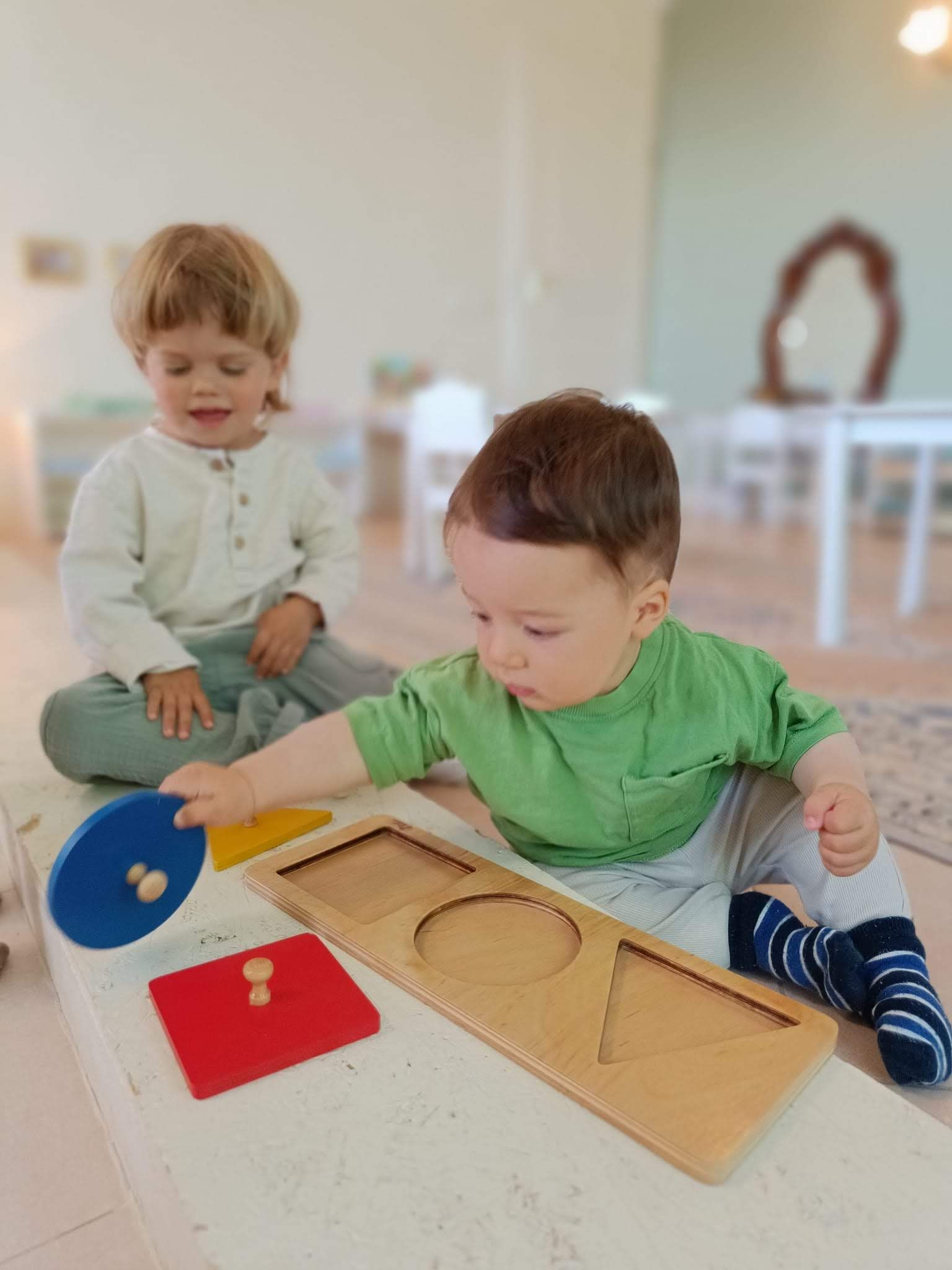
Learning experience
We do not teach children how to be human beings; they come into this world with everything they need.
In the first years of life, children develop the foundations of their personality, their way of thinking and their attitudes.
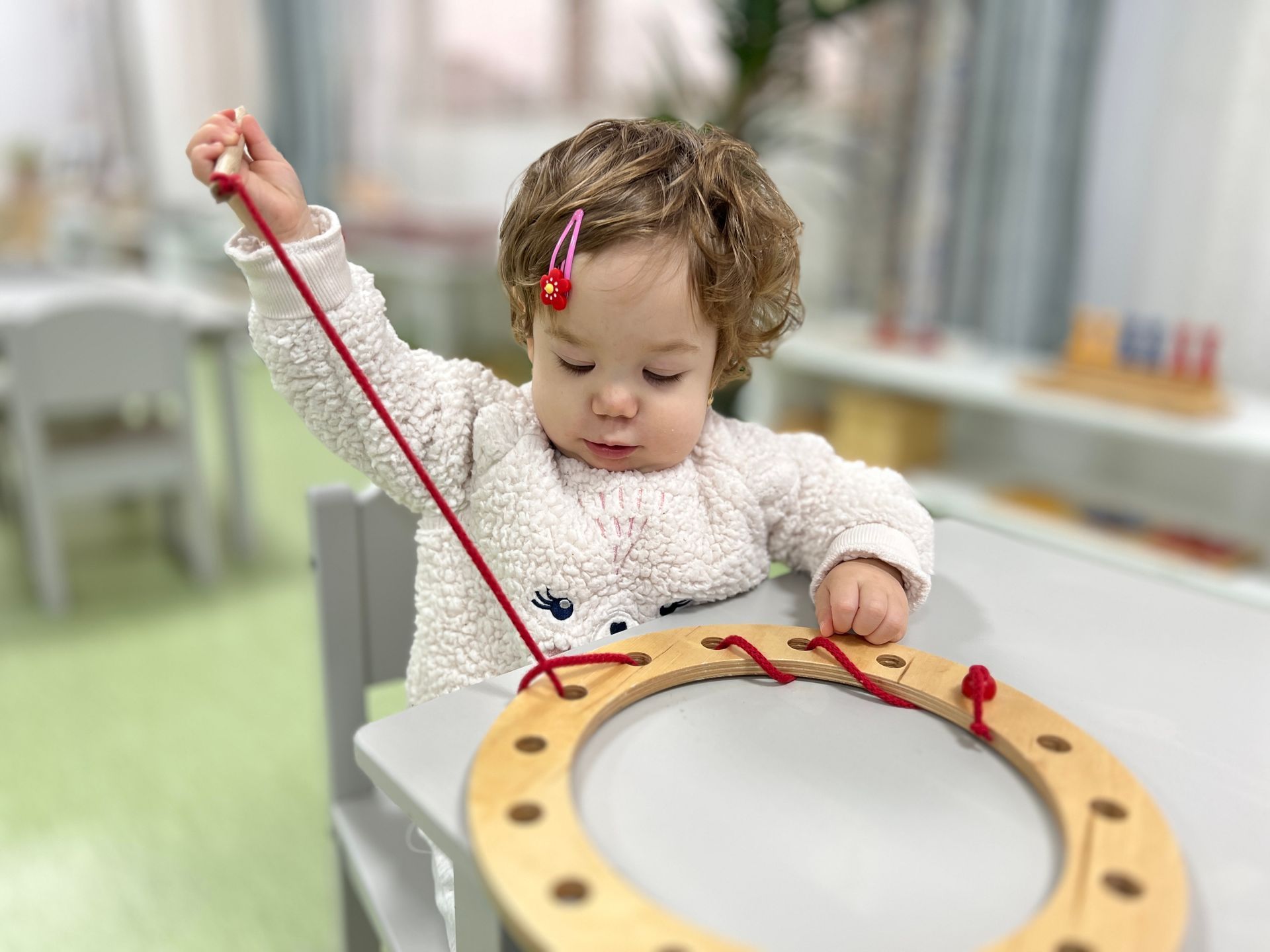
They learn to make decisions, persevere, and be part of a community. Children learn these things naturally in the Montessori community, alongside adults who guide their development. The prepared environment for ages 0–3 comprises the following areas: Practical Life, Language, Art and Music.
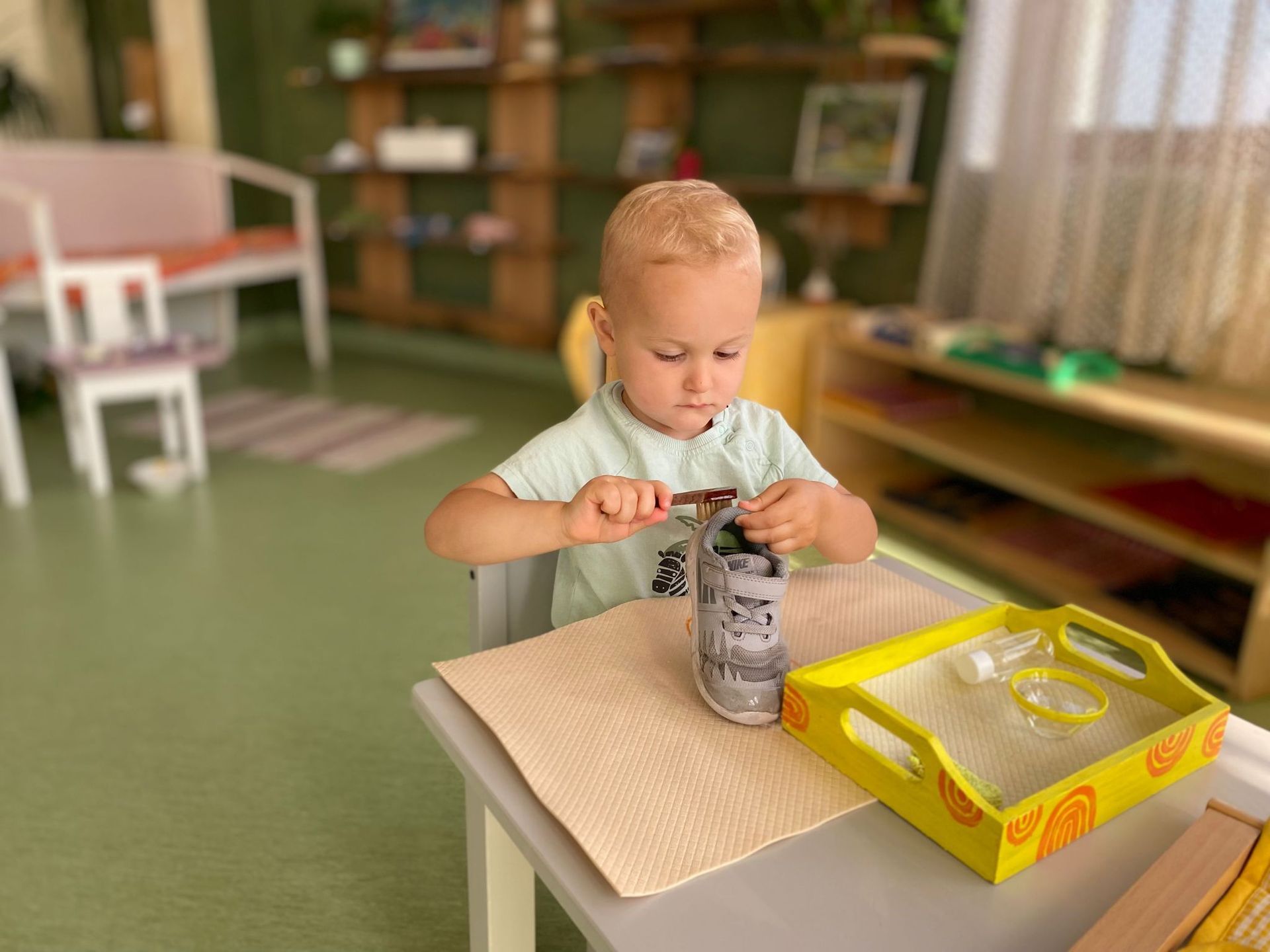
Practical Life
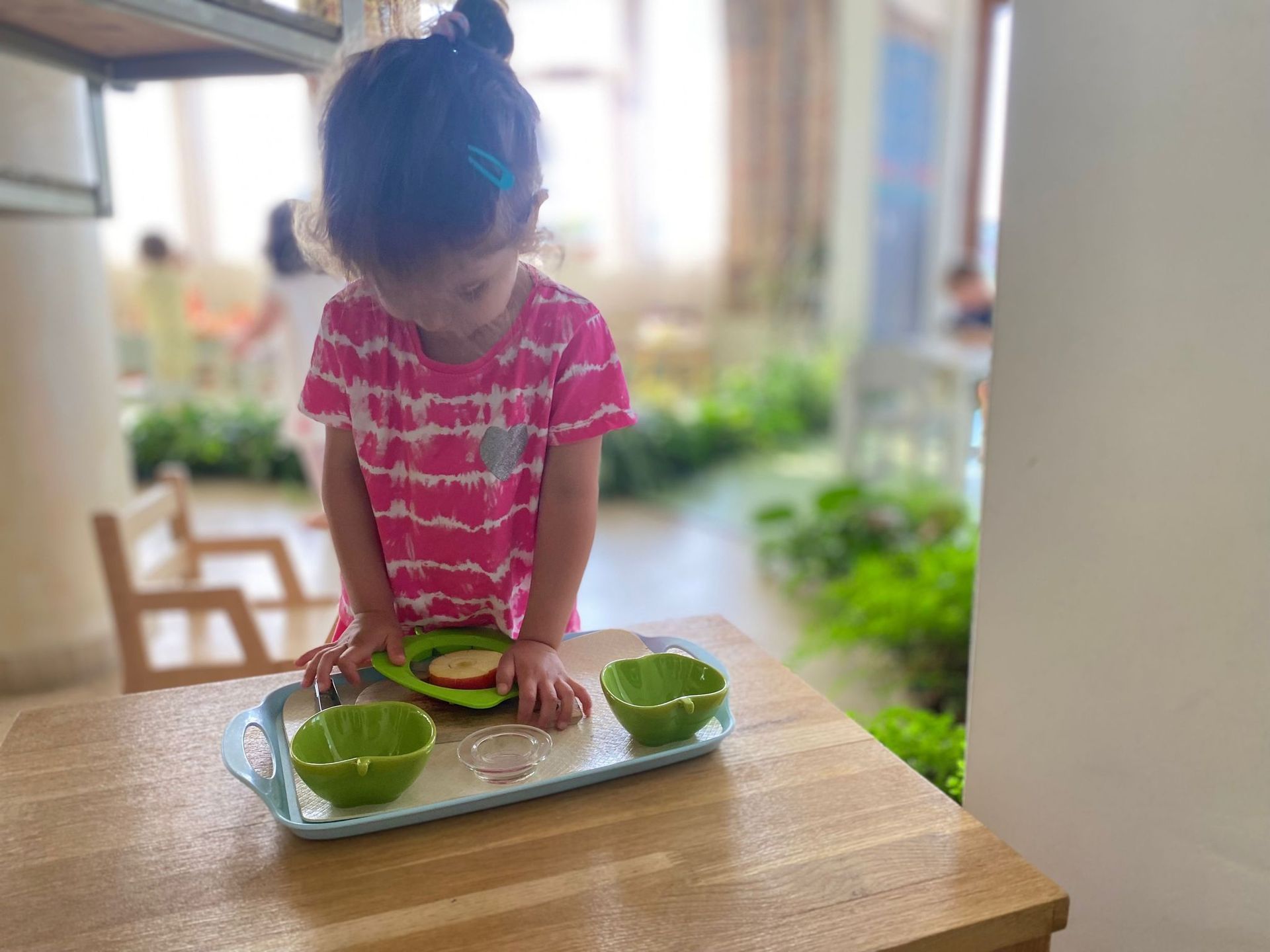
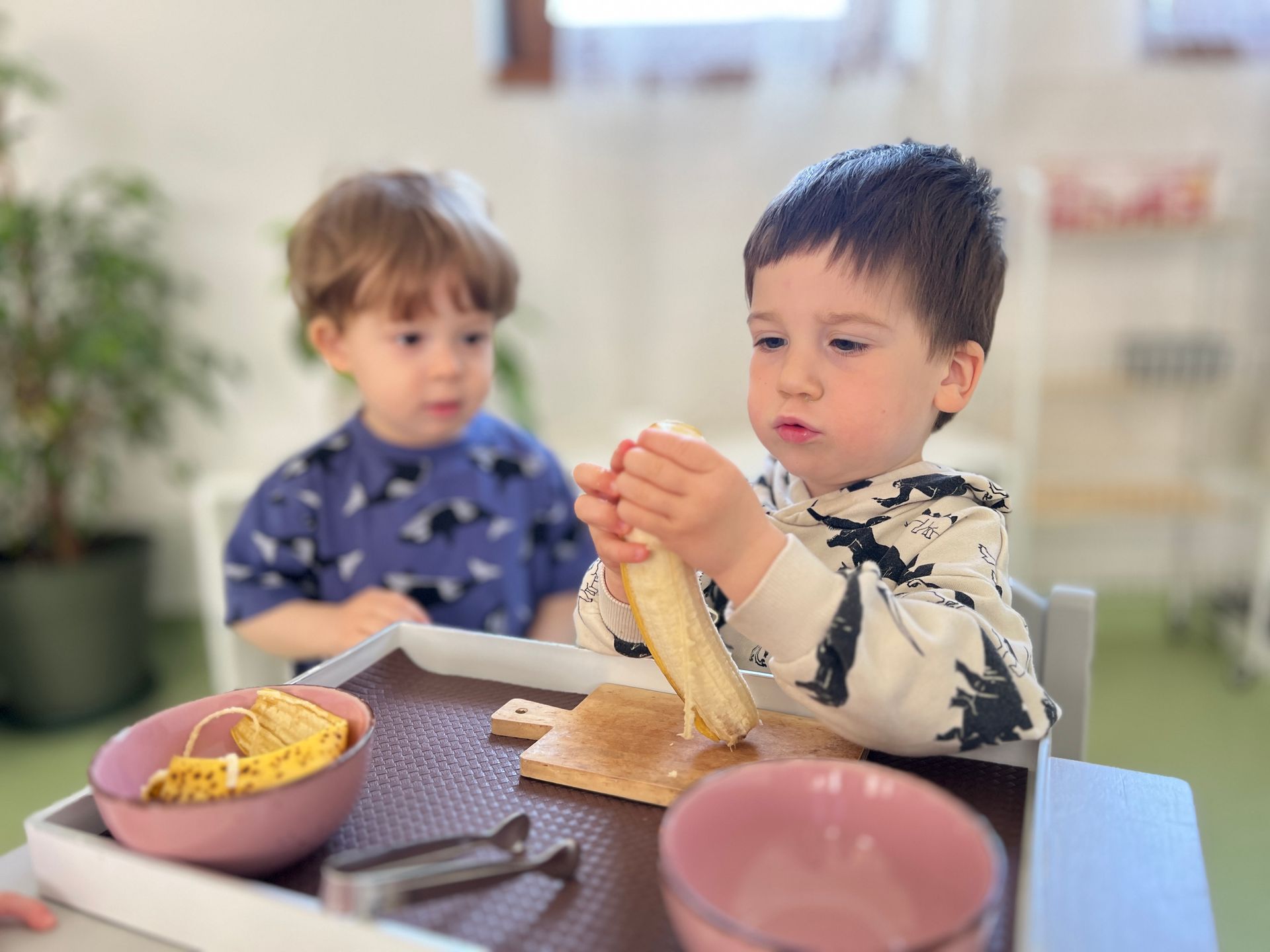
Practical life exercises give children a strong sense of reality, forming the basis for how they will shape their own reality. No activity is more real than caring for yourself and the environment you live in. At the same time, practical life activities offer many opportunities.
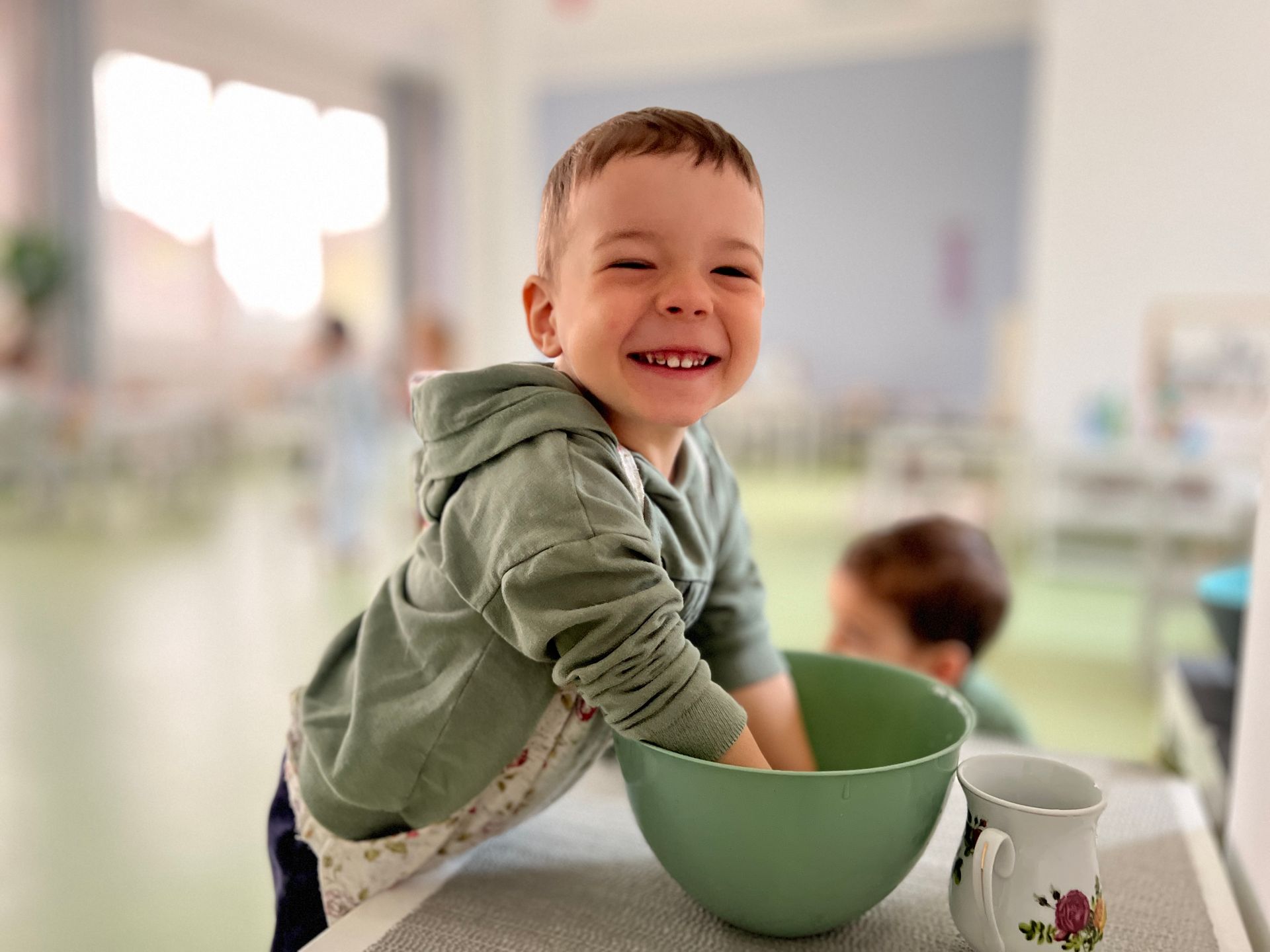
Practical life activities include transferring objects, pouring water into a pitcher, squeezing a sponge, emptying a container and carrying a rug.
Language
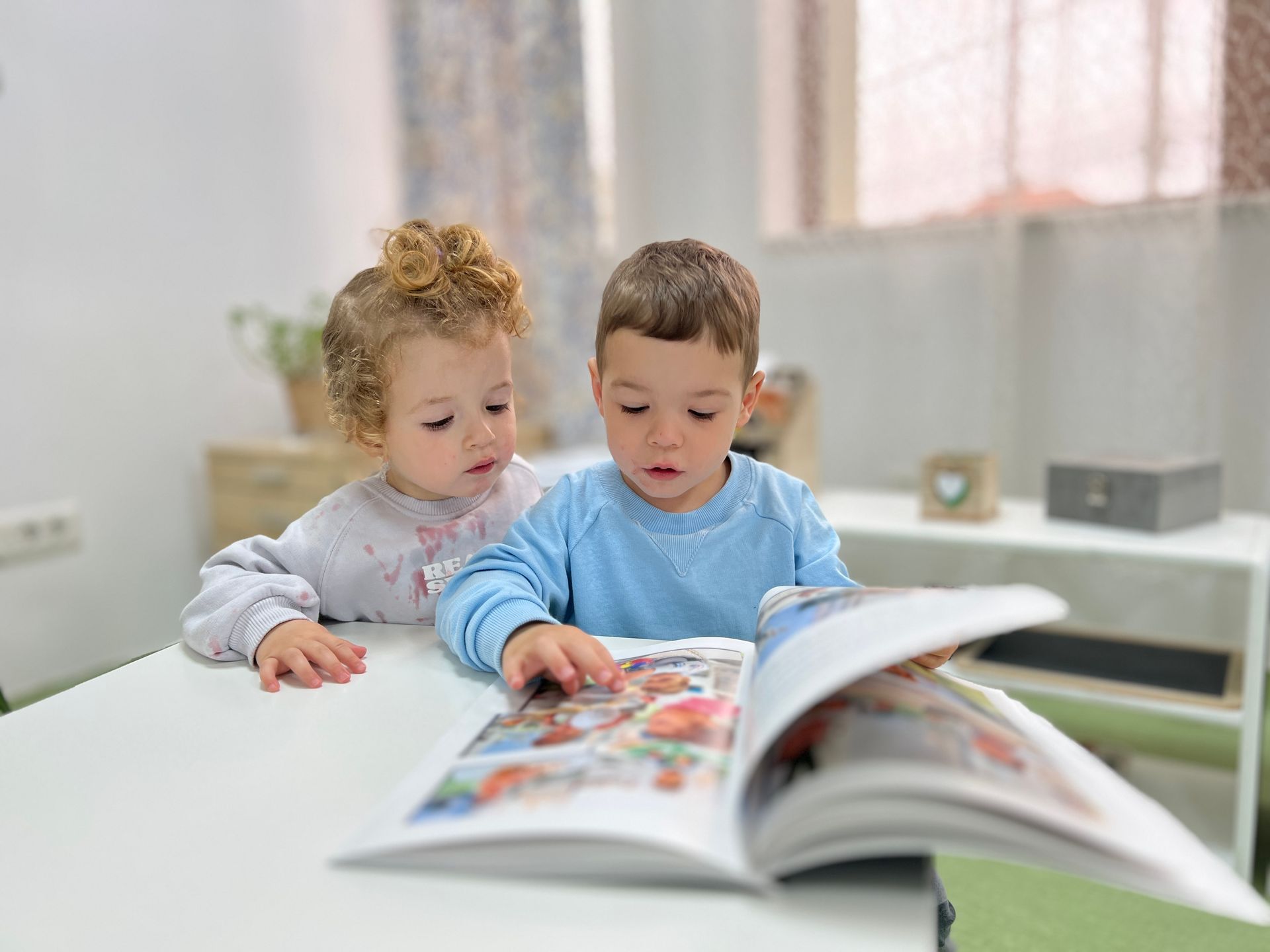
In Montessori for ages 0–3, we usually present things by category. One important aspect of working with children this young, when it comes to language, is pointing. Studies have shown that when we name an object and point to it, the child remembers it better. We take this further by picking objects up and experiencing their shape, smell, etc. All these ways of isolating the object help the child remember the word better, so we aim to engage as many senses as possible.
Art
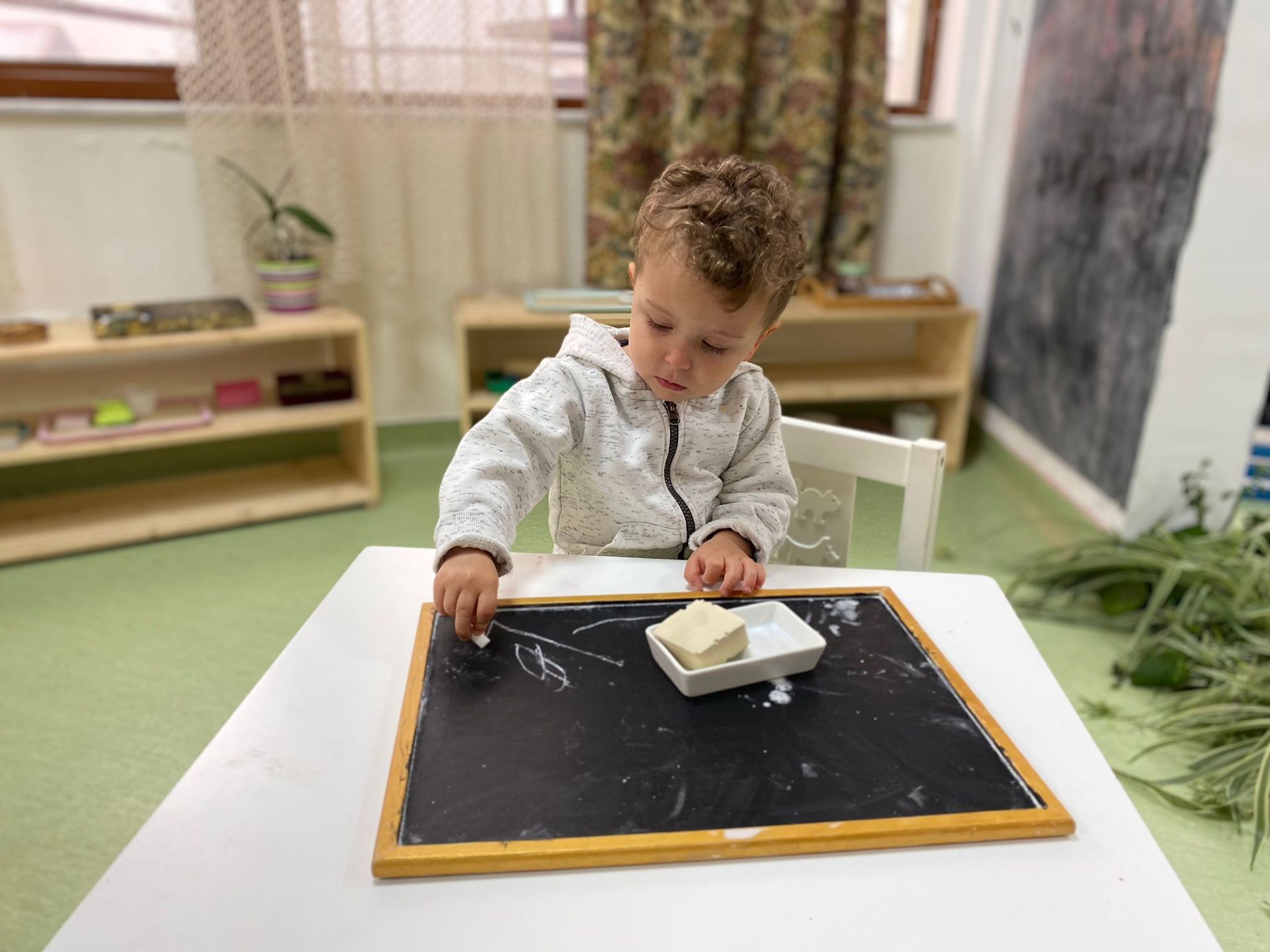
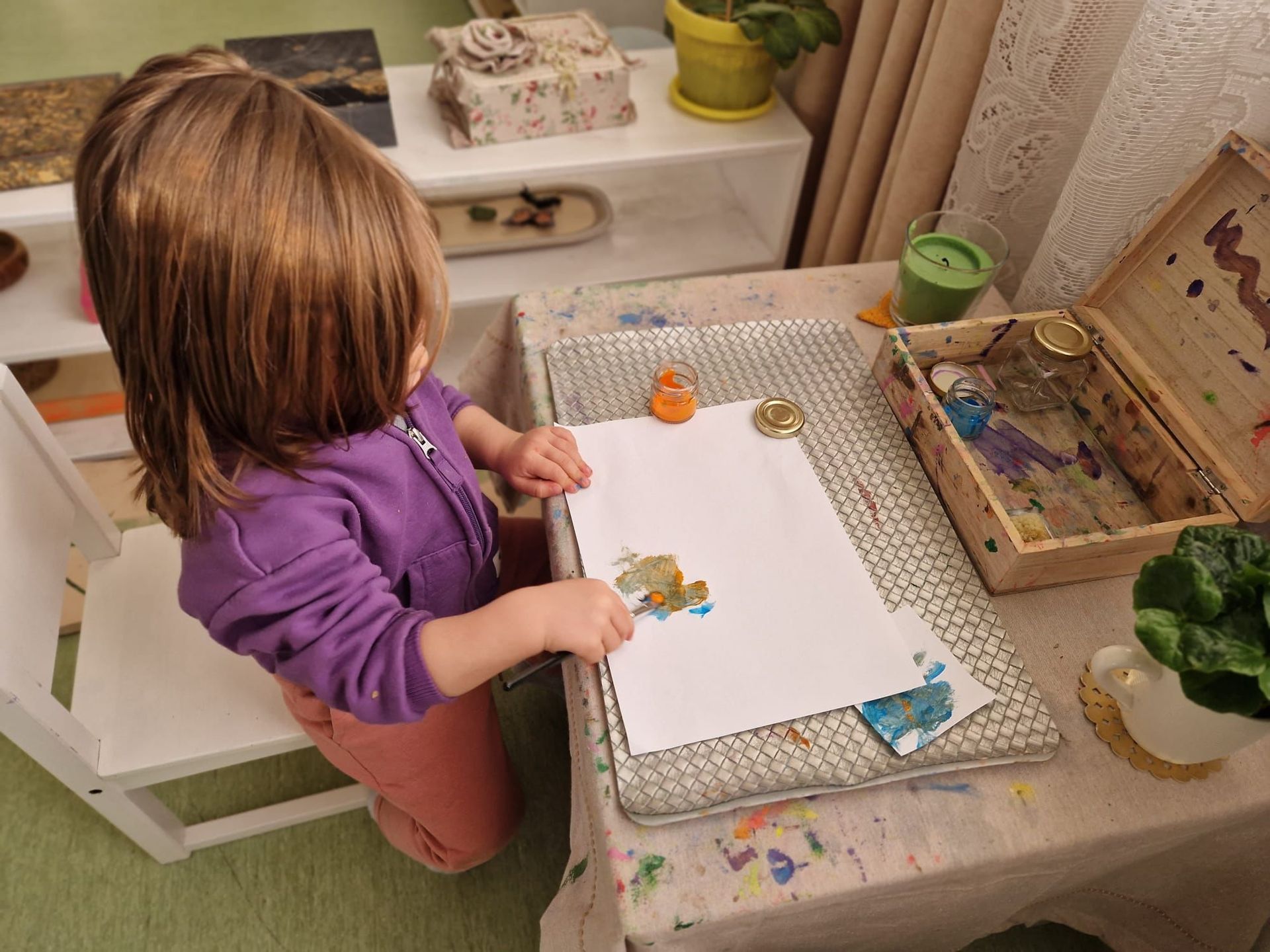
When a very young child (> 2 years old) uses art materials, we say that they are scribbling. Since the child scribbles on their own, without anyone having shown them how, this is called self-taught art. Children do not need lessons for this activity, just as they do not for language.
In a prepared Montessori environment, children can use a chalkboard to draw with coloured chalk and/or an easel to paint with tempera paints. Working with clay is also encouraged, with children provided with the necessary tools: modelling clay, a work surface, a rolling pin and a damp cloth.
Music
The way music affects memory is very important. Mozart’s music and Baroque music both activate both sides of the brain—simultaneous activity in both hemispheres maximizes learning and information retention.
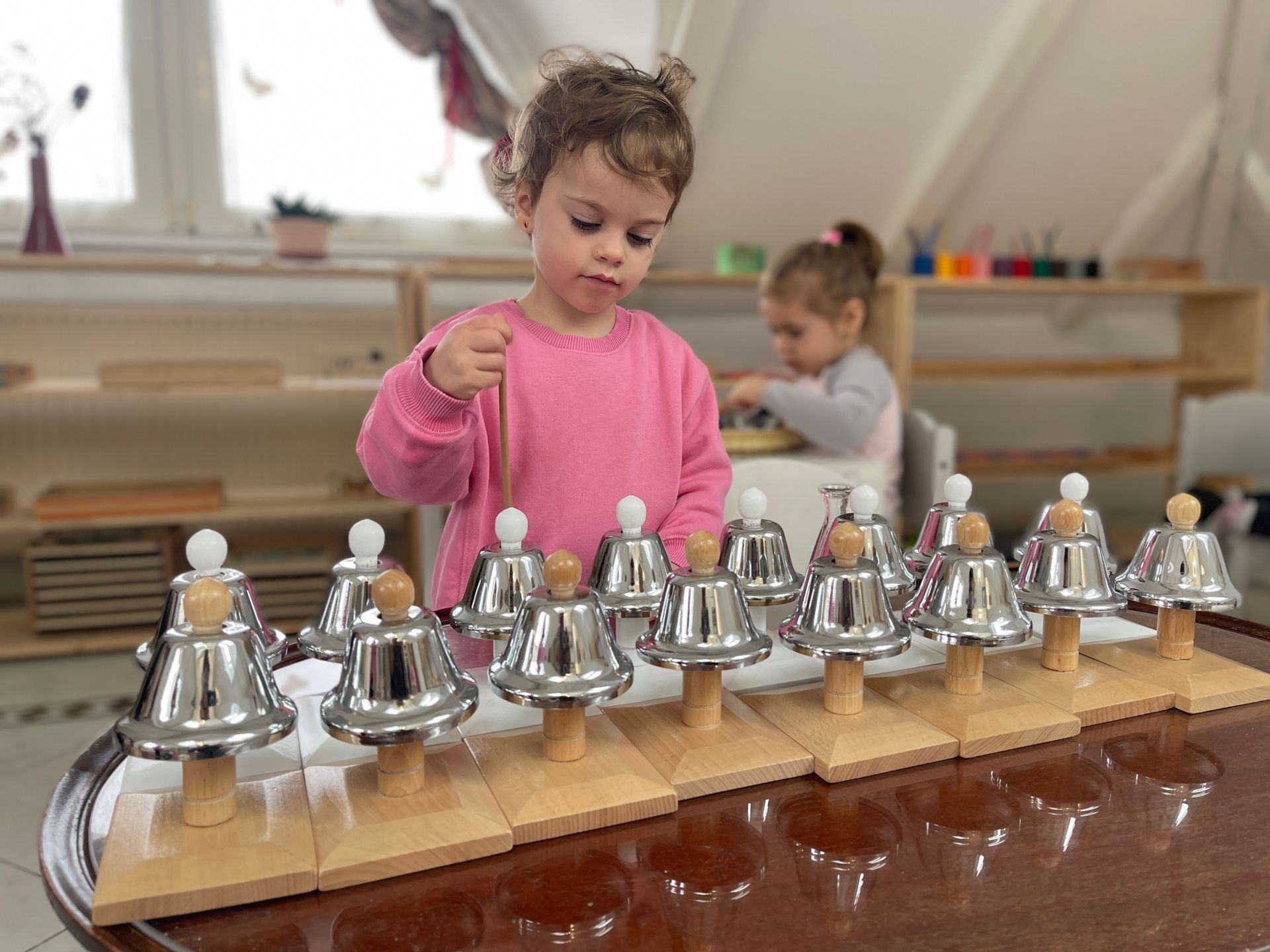
In the Montessori environment, singing is part of every day and can be done as a group activity. Singing and movement are a great way to learn songs and develop children’s motor skills. Children are also introduced to musical instruments that are easy for them to use, both in size and in level of difficulty.
Nursery Program
Montessori
To develop and educate themselves, children need to experience the rhythm of a regular presence.
Although most activities are individual and the lead adult works with each child one-on-one, there is an unconscious network of interconnection within the community. Montessori calls this connection “society by cohesion.” A child cannot be part of this social cohesion as an individual if they are not consistently present.Th
The nursery at Fundația Motessori Cluj is open Monday to Friday throughout the year and offers children aged 1–3 a program from 8:00 to 16:00, and in exceptional cases until 18:00.
08:00-08:45 - Children arrive
08:45-08:45 - Access to the kindergarten closes
08:00-09:00 - Breakfast
08:45-10:45 - Montessori Work Cycle
10:45–12:15 - Music / Outdoor activities
12:30-13:00 - Lunch
15:00-15:30 - Relaxation / Snack
15:30–16:00 - End of day
Admissions
A safe environment for children, with care in every detail
The first step is to carefully browse our website and learn about Montessori from the sources we recommend in the About Montessori Philosophy section.
We recommend that children be no older than 2, so they can spend time in the 1–3-year-old community before beginning the 3-year Montessori cycle in the 3–6 environment.
Parents’ attitude is important. We recommend that you be emotionally prepared for this step so you can inspire security and confidence in your child.


