



Preschool
A prepared environment for children aged 3 to 6.
Children’s brains love order. Their inclination toward order helps them categorize information, and all the information they encounter creates a need to categorize it again. If a child is constantly faced with changes at home, the need to reorganize can have a negative impact.
About the 3–6 age group
Around the age of 3, we see the transition from the unconscious mind to the conscious mind.
This can be seen when the child says “I”—they are indicating an awareness that they are a separate person, can make decisions on their own, and can say what they want. This is also the stage when the child says “no.” That doesn’t mean they don’t want to do something; they want to be asked. They have discovered this new person and want to exercise their will—to have the opportunity to decide.
Children go through many physical changes at this stage, as well as changes in their nervous system. Changes in their surroundings and the more they experiment lead to more connections being formed in the brain. The more often each experience is repeated, the stronger the connections in the brain become.
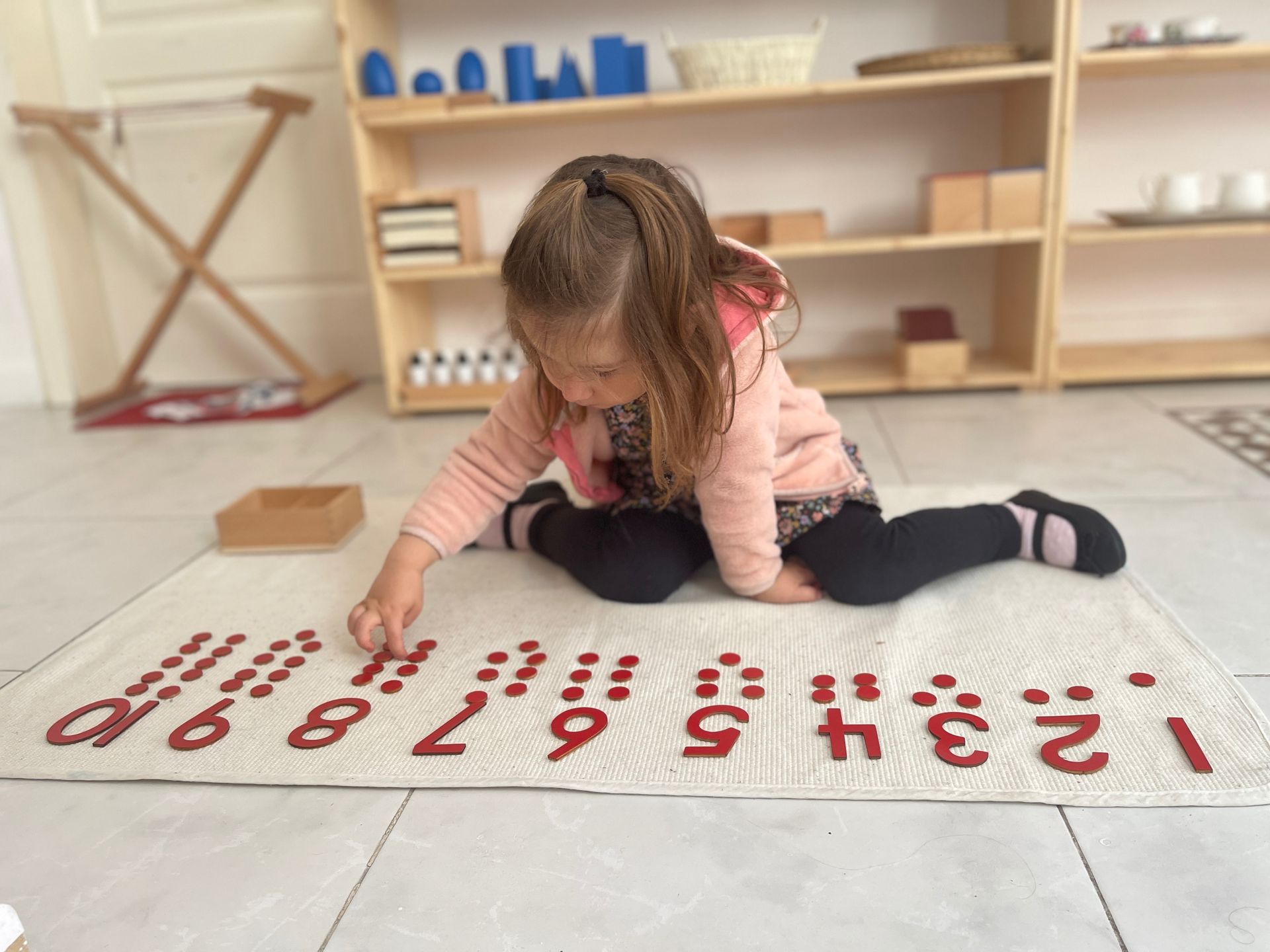
Children aged 3–6 want to do everything by themselves, and need to do so in order to learn. They develop an understanding of the world through their own activity. A child will become frustrated if an adult tries to persuade them to do something they do not want to do. They may become upset when an adult does things the child could do independently. When adults recognise these “I want to do it myself” reactions, conflicts can be greatly reduced.
The child is determined to learn and needs plenty of time. Whenever we do something for the child, we do not give them the opportunity to learn on their own and impose our will on theirs. We must listen to this need for independence and support children as they learn.
The child now learns consciously
The child seeks repetition and reassurance.
When we are with young children, we tend to repeat ourselves often. Through repeating activities and seeking order and reassurance, children can explore the world with their senses. Children need to do many hands-on activities, which is why they enjoy taking part in family activities, helping prepare food, cleaning, and so on. Adults should give children the opportunity to engage actively with their surroundings.
The conscious absorbing mind is present from ages 3 to 6. We call the child in this period the “conscious worker.” The child is aware of what they are doing and what they want to do; now they need to revisit all the impressions they received during the first period. For example, between ages 0 and 3, the child absorbed many colours from their surroundings. Between ages 3 and 6, they consciously work with these colours to learn their names and explore different facts about them (for example, mixing blue and yellow makes green).
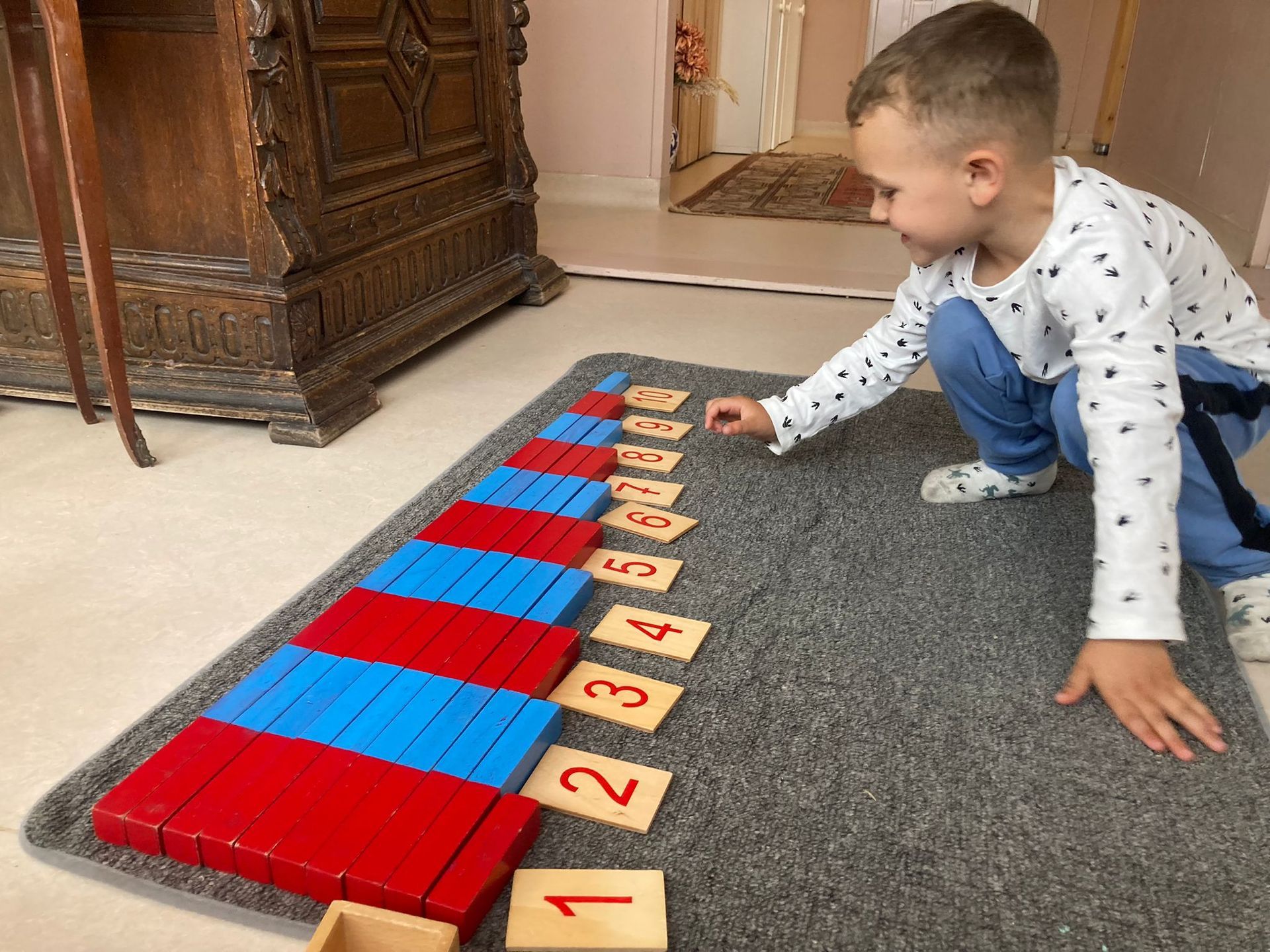
Prepared environment tailored to the specific needs of each stage of learning
Children enjoy a rich learning experience, comprising the Montessori curriculum as well as other field trips and meetings with experts from various fields.
The curriculum follows the principles and concepts developed by Dr. Montessori and AMI, learned through Montessori educator training in the following areas: Practical Life, Sensorial Activities, Language Exercises, and Mathematics.
Learning experience
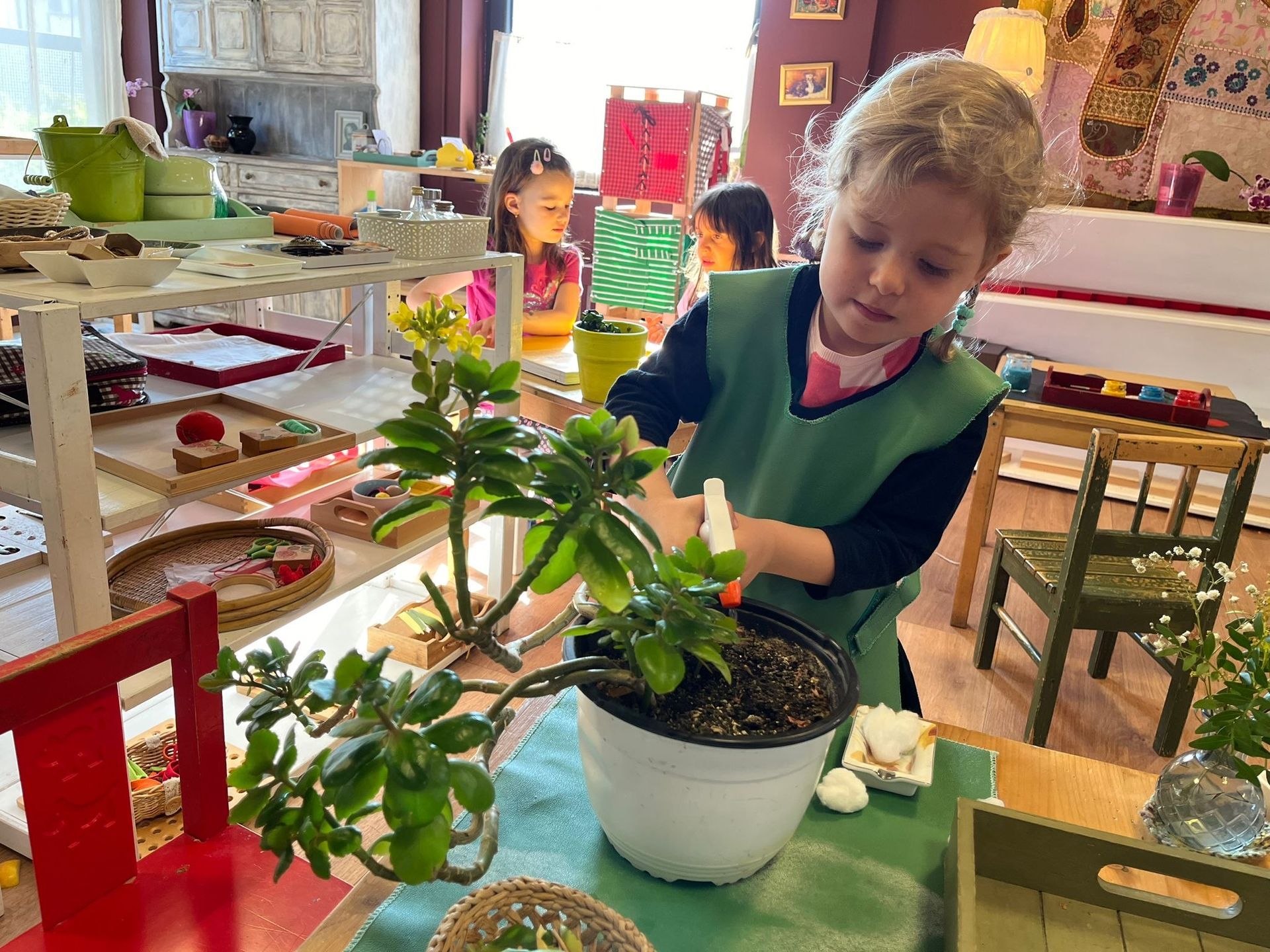
Practical Life
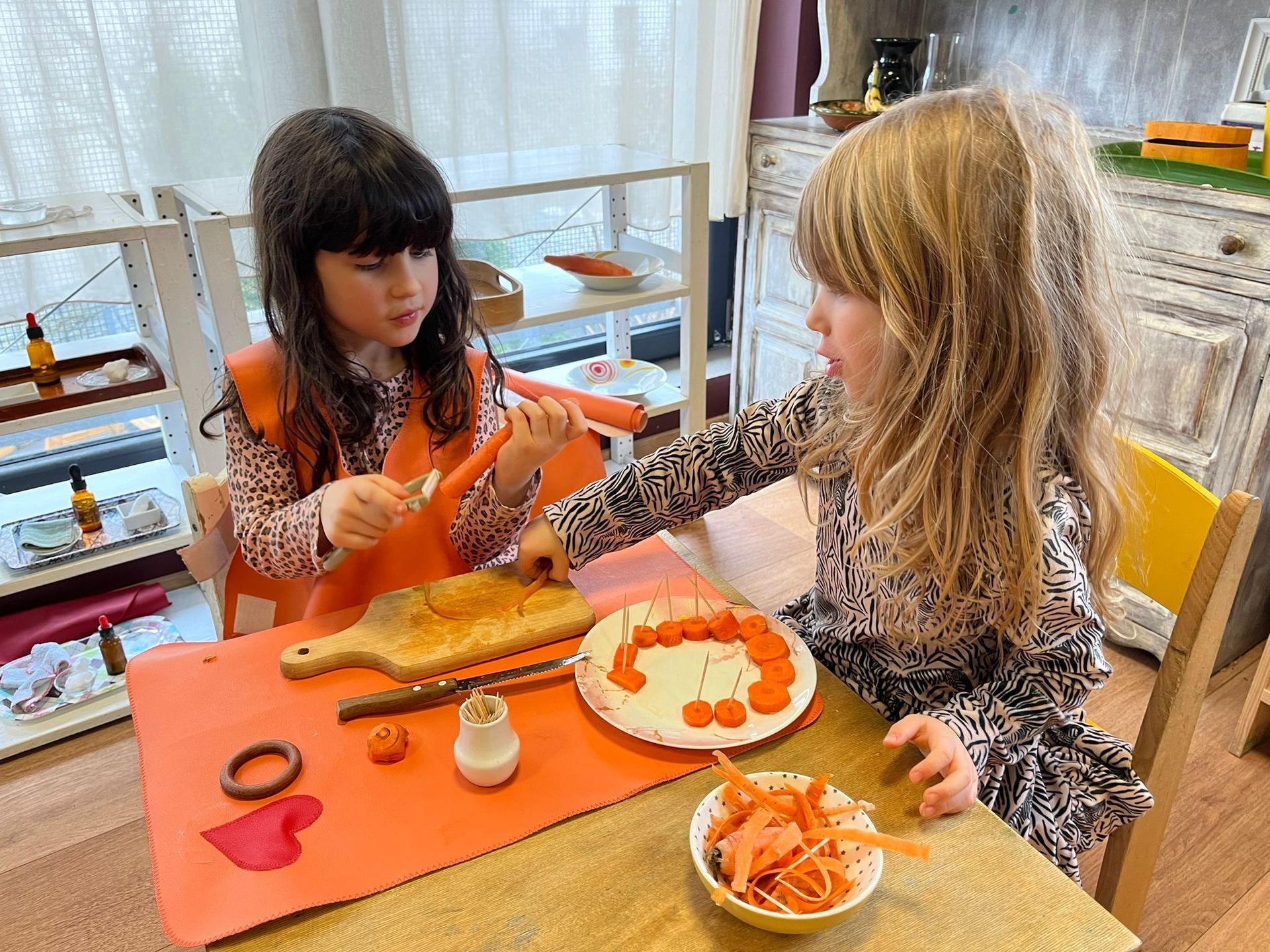
Practical life includes everyday activities that help children become independent and self-confident, and teach them to concentrate. These exercises develop care for the environment in which the child works, care for themselves, and social skills.
Sensorial
Sensory activities help children develop their hearing, sight, smell, taste and touch. Through sensory exercises, children can distinguish, arrange, classify and describe sensory impressions related to length, height, temperature, weight, colour, inclination, smell and sound.
Language
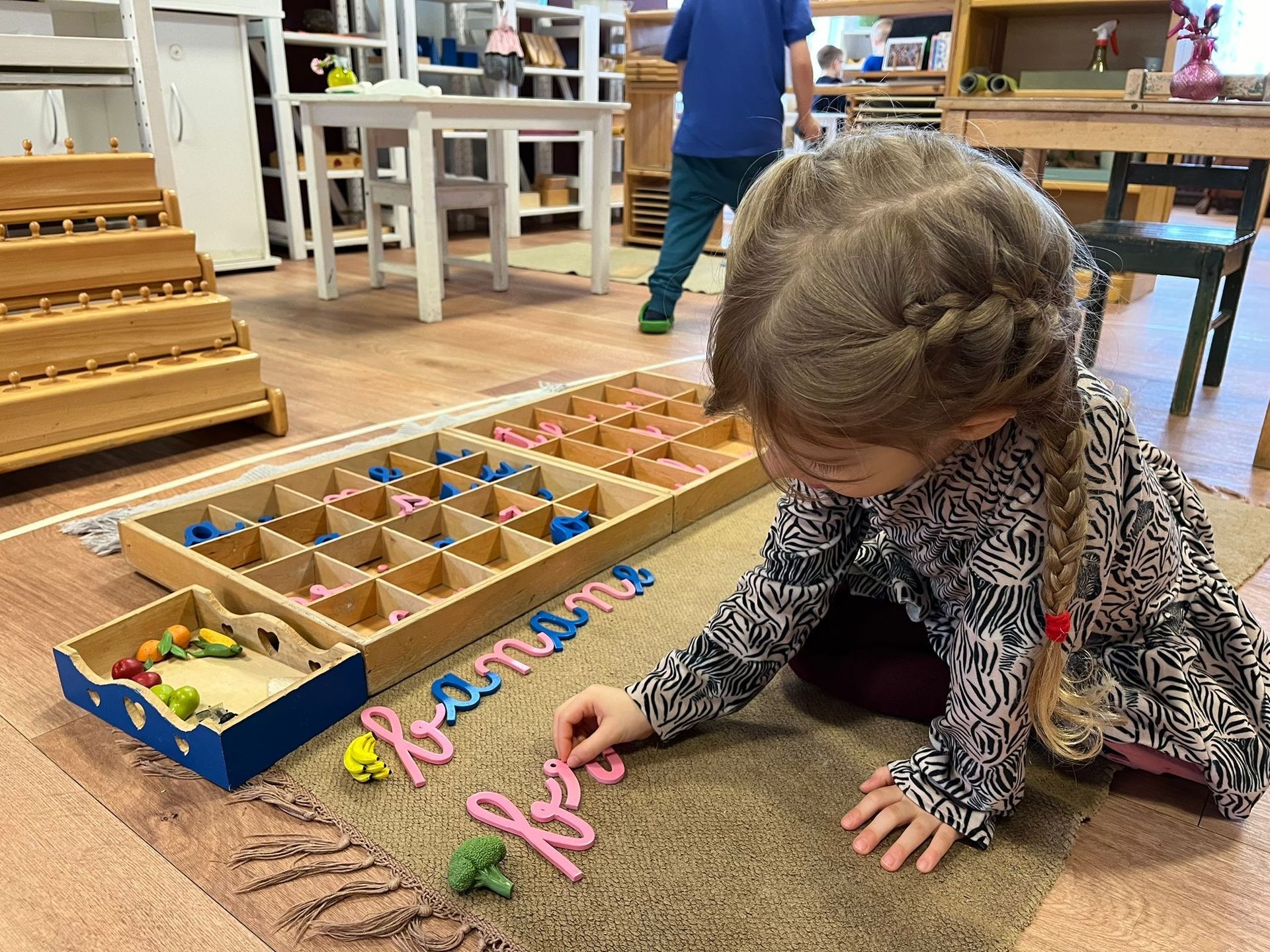
Language activities help children learn to read and write, and to understand the meaning of words. Language is developed through songs, poems and stories.
Mathematics
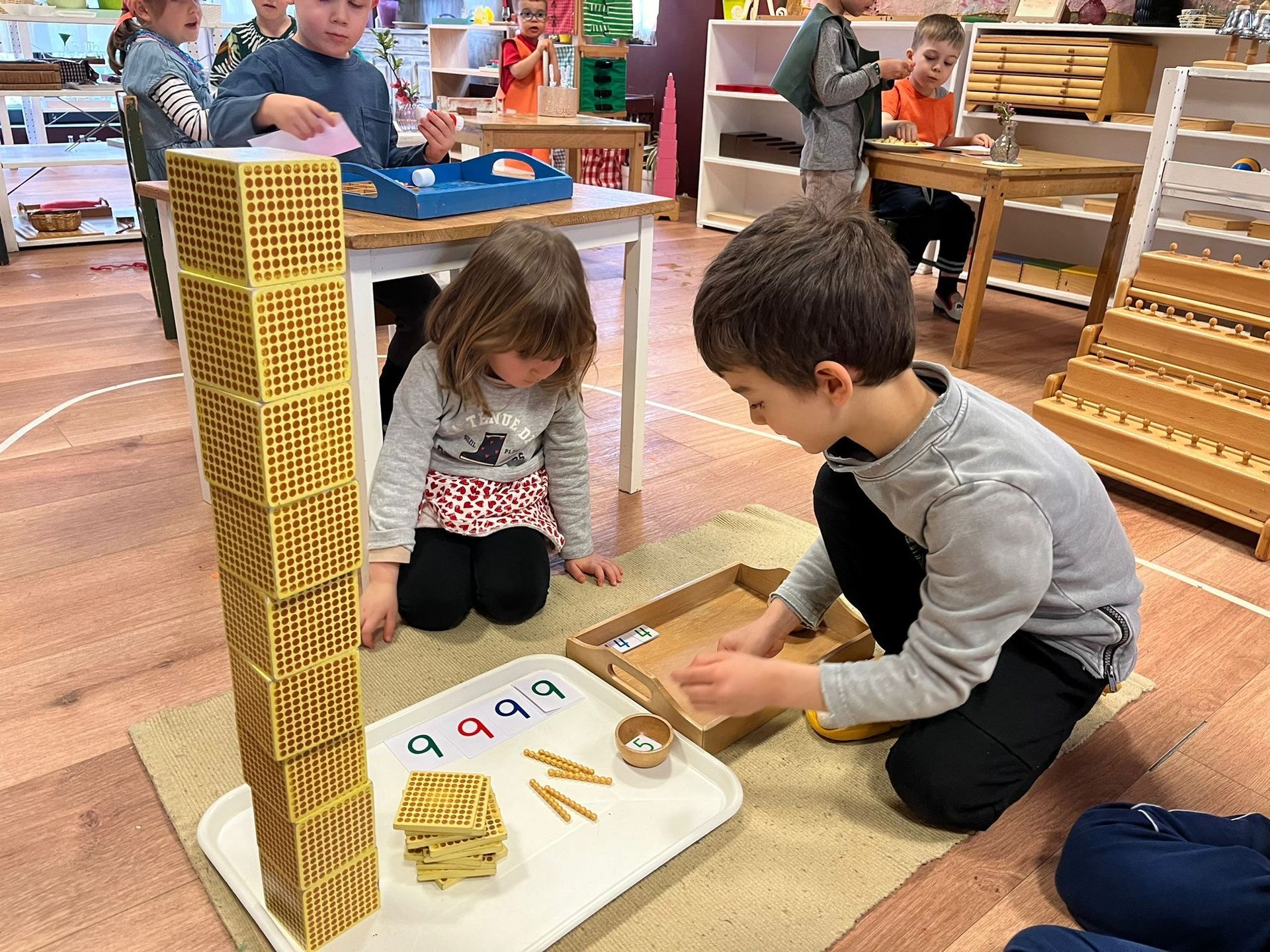
Mathematics is a natural mental process that begins at a concrete level and progresses towards an abstract one. Each exercise is based on concrete, tangible experiences that lay the foundation for the future development of abstract mathematical thinking.
Foreign languages
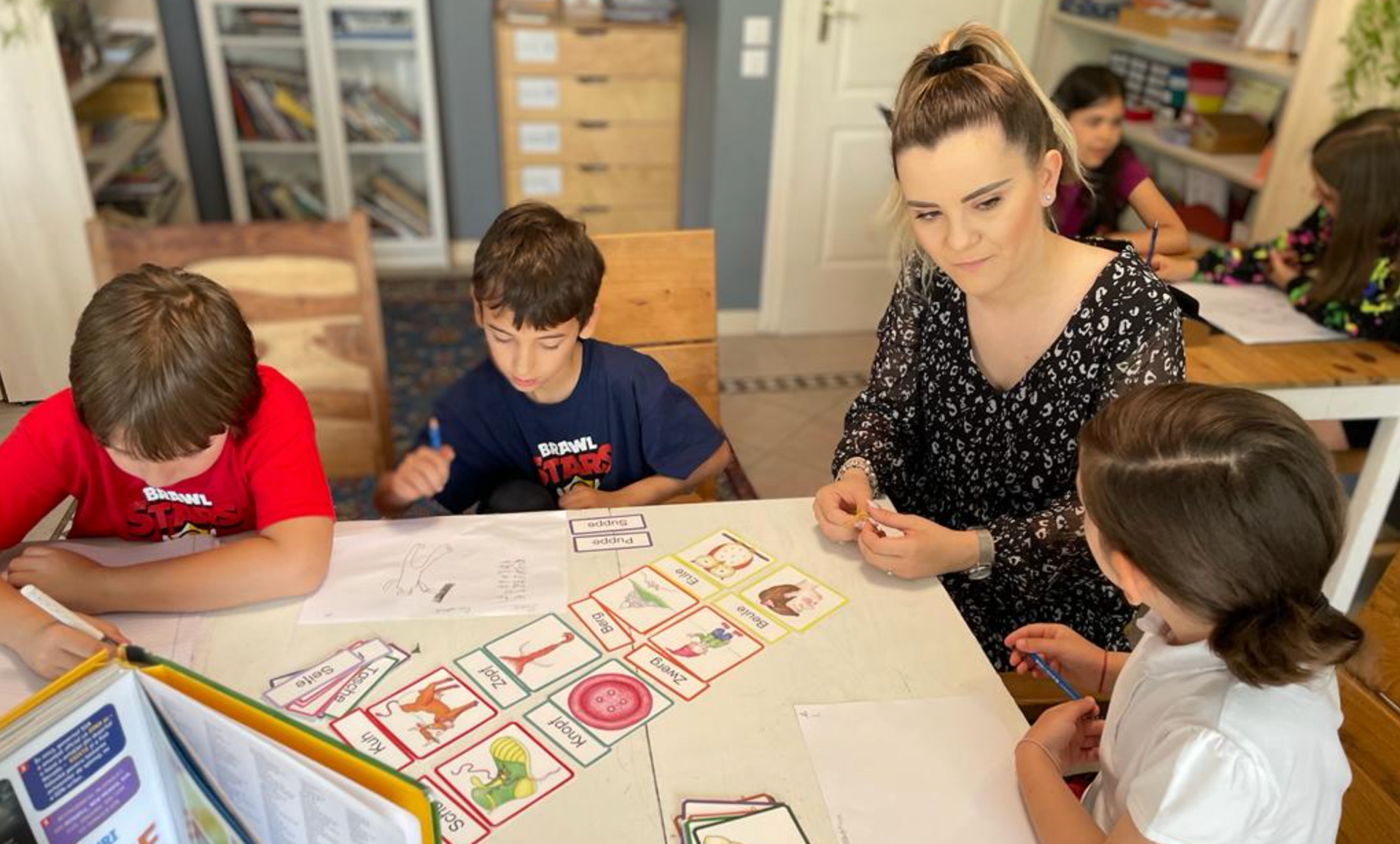
Knowing that language has a very long sensitive period, we give it special importance. We believe it is beneficial for children to learn as many languages as possible and to have daily contact with at least one foreign language by the age of 6. Children are exposed to English and German as foreign languages through Montessori language activities.
Sports
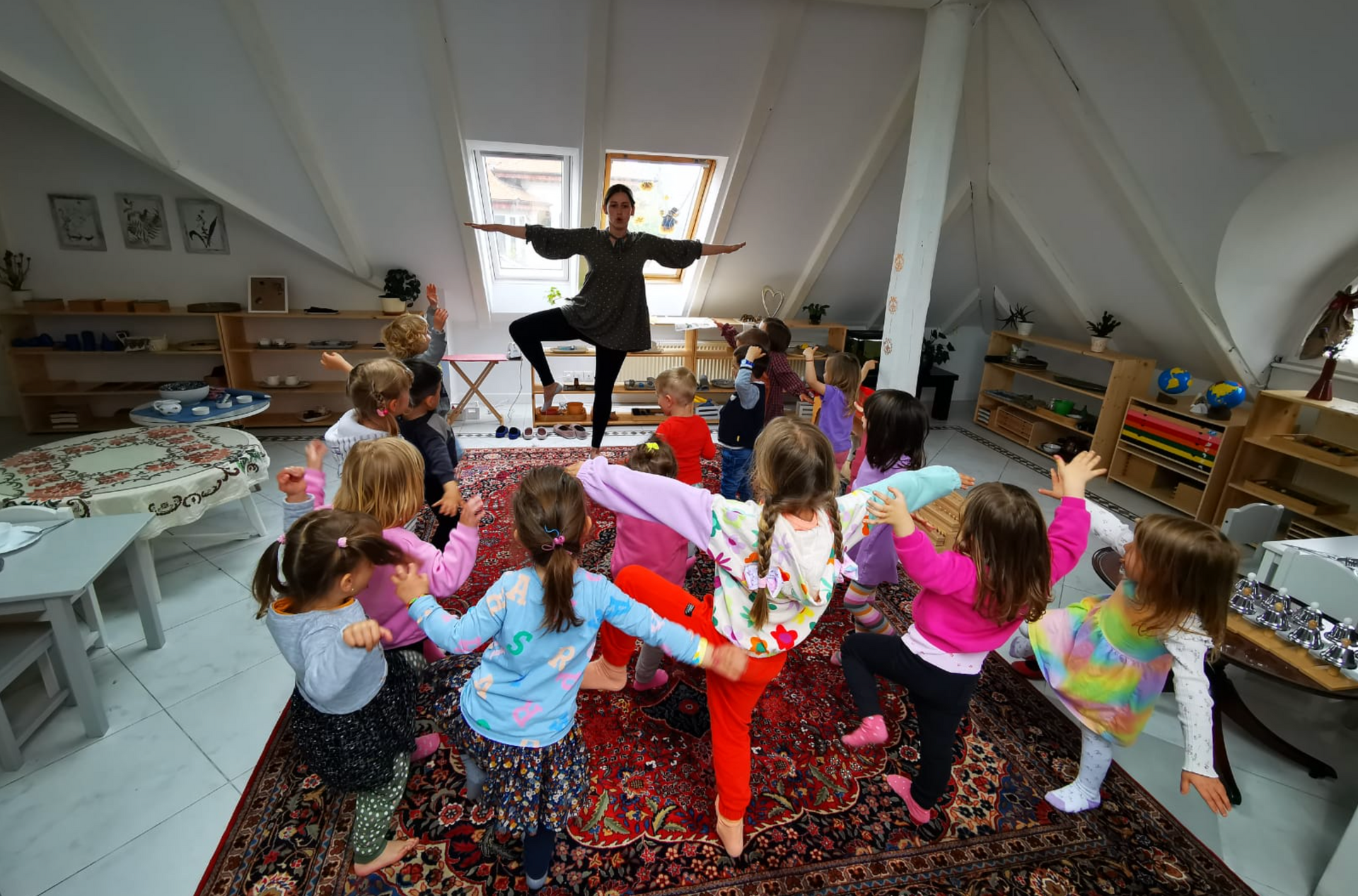
Physical activity helps children become aware of their bodies and movements. It supports the development of motor skills and coordination, builds confidence in themselves and their abilities, strengthens their muscles, and helps them develop good posture and body awareness.
Montessori Kindergarten Program
To develop and educate themselves, children need to experience the rhythm of a regular presence.
Although most activities are individual and the lead adult works with each child individually, an unconscious network of interconnectedness exists within the community. Montessori calls this connection “society by cohesion.” A child cannot be part of this social cohesion as an individual unless they are consistently present.Th
The nursery at Fundația Montessori Cluj is open Monday to Friday throughout the year and offers children aged 1–3 a program from 8:00 to 16:00, and in exceptional cases until 18:00.
08:00-08:45 - Children arrive
08:45-08:45 - Access to the kindergarten closes
08:00-09:00 - Breakfast
08:45-11:45 - Montessori Work Cycle
11:45-12:30 - Music / Outdoor activities
12:30-13:30 - Lunch
13:00-15:30 - Relaxation / Sleep
15:30-15:45 - Snack
15:30–16:00 - End of day
16:00-17:45 - Montessori Work/Activities
17:45-18:00 - Kindergarten closes
Admissions
A safe environment for children, with care in every detail
The first step is to carefully browse our website and learn about Montessori from the sources we recommend in the About Montessori Philosophy section.
We recommend that children be no older than 2, so they can spend time in the 1–3-year-old community before beginning the 3-year Montessori cycle in the 3–6 environment.
Parents’ attitude is important. We recommend that you be emotionally prepared for this step so you can inspire security and confidence in your child.


